c.curionodeThe Nobel Archive

1984 · Literature

Give everyday life a lyrical voice

Seifert’s inventive Czech poetry joins sensory detail, love and memory with concern for human freedom.

Czech poetryPraguelyricmemory
1984Literature

Visual guide

The prize, pictured

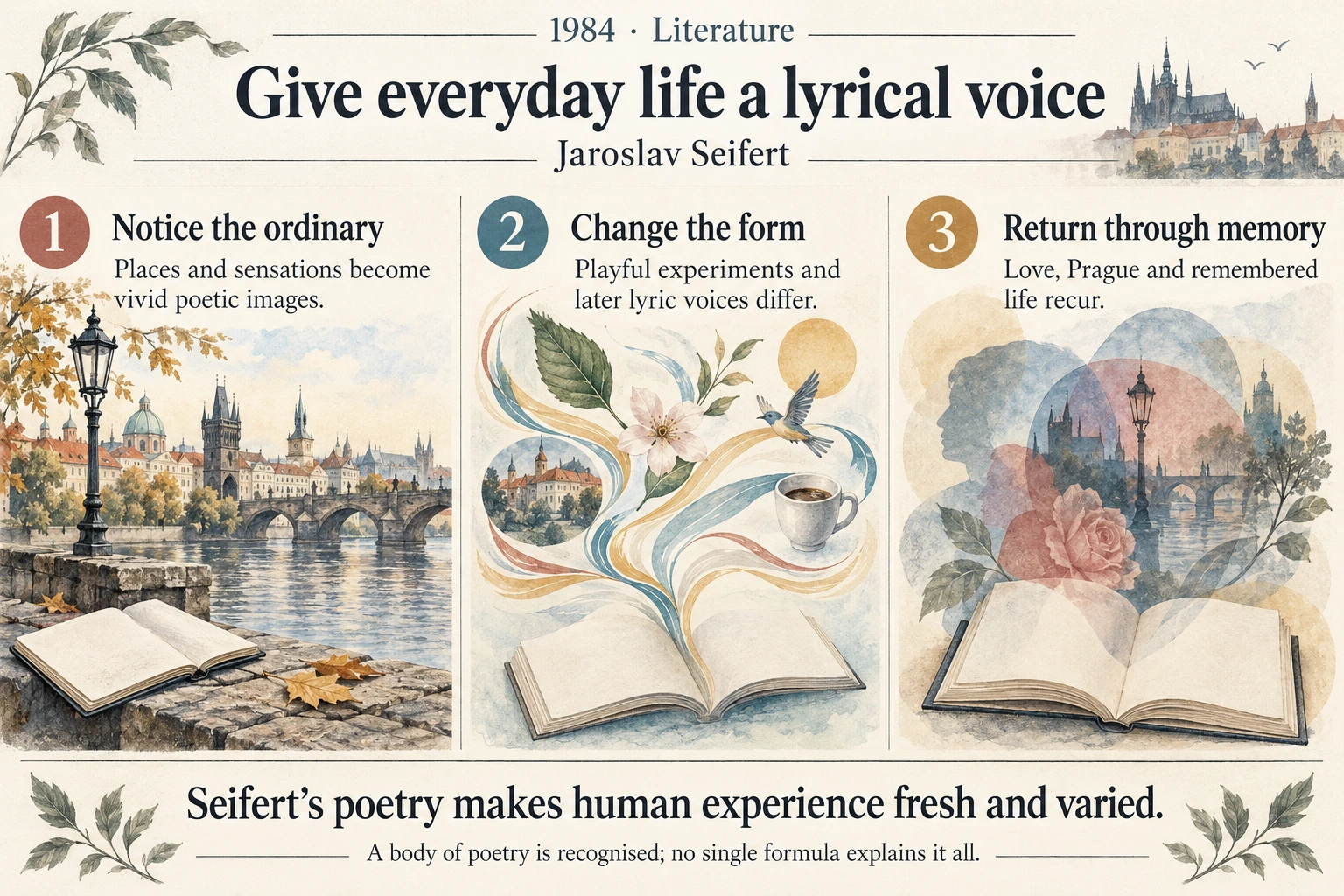
Infographic explaining Give everyday life a lyrical voice
Original AI-generated infographic. A conceptual overview; the explanations and sources below provide context.
Read the poster text

Seifert’s poetry makes human experience fresh and varied.

  1. Notice the ordinary

    Places and sensations become vivid poetic images.

  2. Change the form

    Playful experiments and later lyric voices differ.

  3. Return through memory

    Love, Prague and remembered life recur.

A body of poetry is recognised; no single formula explains it all.

01 · The contribution

The idea, in everyday language

Seifert’s poetry gives people and places a vivid presence through rhythm, imagery and changing forms. Prague, childhood, love and remembered encounters recur without reducing experience to a single political programme. His early participation in Devětsil and poetism encouraged playful experiments with modern life.

Later writing combined intimacy with a reflective voice, including freer verse and attention to age and memory. Maminka and Koncert na ostrově belong to different moments in this long career; Být básníkem appeared in 1983. The Nobel citation recognised fresh, sensuous and inventive poetry that offered a liberating image of human resilience and variety.

Why it matters

The prize brought international attention to Czech-language poetry and a writer whose work remained valued despite restrictions on publication. His defence of literary freedom belongs to the historical context, while the artistic achievement lies in the poems and their varied forms.

02 · The people

Who brought the idea to life?

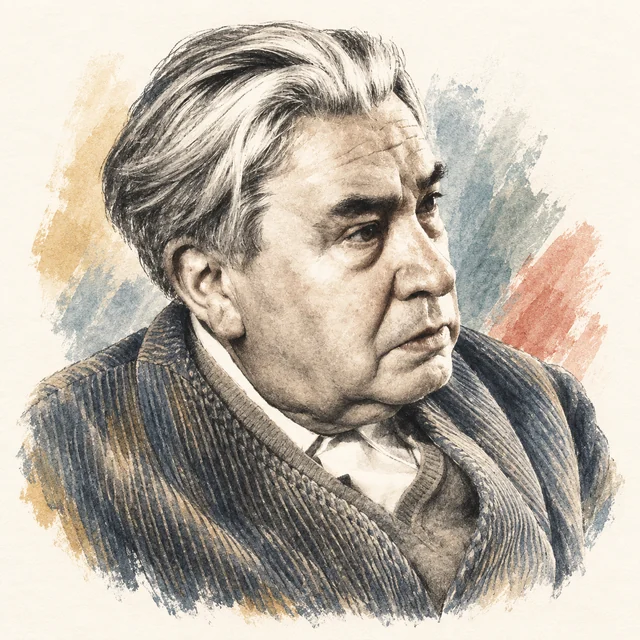
Illustrated portrait of Jaroslav Seifert

Jaroslav Seifert

Prize share · 1

Seifert’s poetry joins freshness, sensual imagery and inventive language with affection for people, places and human freedom. Prague, love and memory recur across changing forms, from avant-garde play to later free verse. The Literature Prize recognised his poetic achievement across a body of work, rather than rewarding one political statement or one collection. He received the full prize.

Read the biography ↗

03 · Years in the making

The path here

  1. 1921

    Město v slzách, his first poetry collection, appears.

  2. 1925

    Na vlnách TSF explores avant-garde poetism.

  3. 1954

    Maminka develops intimate lyric themes.

  4. 1984

    Seifert receives the full Literature Prize.

04 · Read further

From the original sources

Original explanations by Curionode, based on the official records below. Biographical details and affiliations refer to the award year.

  1. Official announcement nobelprize.org
  2. Prague Municipal Library: Seifert memoir editions mlp.cz

More in Literature

Browse this subject ↗