c.curionodeThe Nobel Archive

1986 · Literature

Bring myth and modern power to the stage

Soyinka’s drama, poetry and prose connect cultural memory with contemporary responsibility.

dramaYoruba traditionssatirecultural memory
1986Literature

Visual guide

The prize, pictured

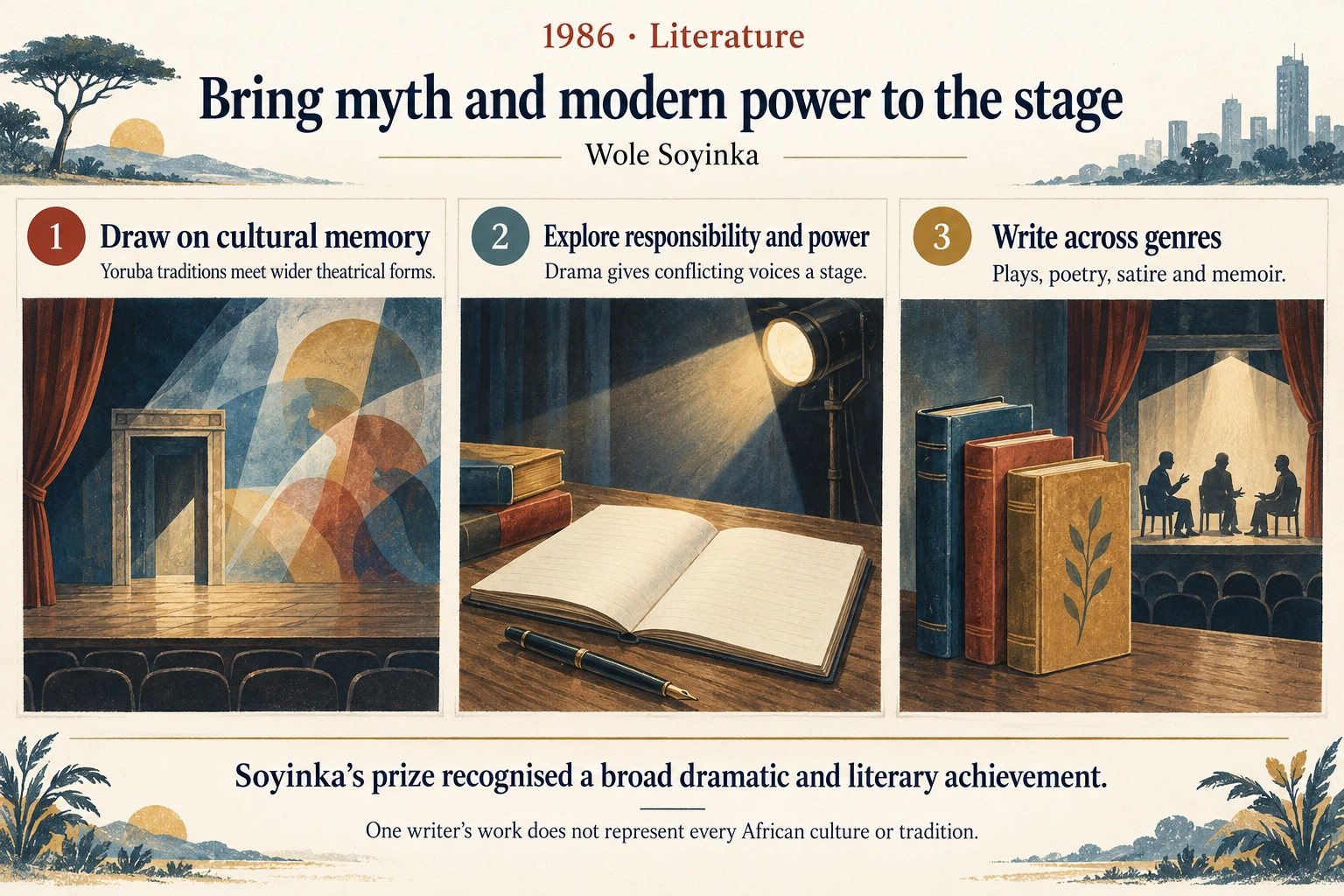
Infographic explaining Bring myth and modern power to the stage
Original AI-generated infographic. A conceptual overview; the explanations and sources below provide context.
Read the poster text

Soyinka’s prize recognised a broad dramatic and literary achievement.

  1. Draw on cultural memory

    Yoruba traditions meet wider theatrical forms.

  2. Explore responsibility and power

    Drama gives conflicting voices a stage.

  3. Write across genres

    Plays, poetry, satire and memoir.

One writer’s work does not represent every African culture or tradition.

01 · The contribution

The idea, in everyday language

Writing primarily in English, Soyinka draws on Yoruba traditions and on international literary and theatrical forms. Ritual, myth, comedy and tragedy become resources for examining responsibility, authority and relations within a community. His works engage with modern power without reducing a varied literary world to one political message.

His range includes A Dance of the Forests, performed in 1960, the play Death and the King’s Horseman, prison memoir The Man Died and childhood memoir Aké. Satire and poetry are part of the same broad body of work. The Literature Prize recognised this artistic range and cultural perspective, rather than one book, a scientific discovery or an award for activism alone.

Why it matters

Soyinka expanded the international visibility of literature grounded in Yoruba cultural resources and shaped through wider artistic exchange. His work asks how memory, communal obligations and individual action interact with power. Recognising one writer does not make his work representative of every African culture or literary tradition.

02 · The people

Who brought the idea to life?

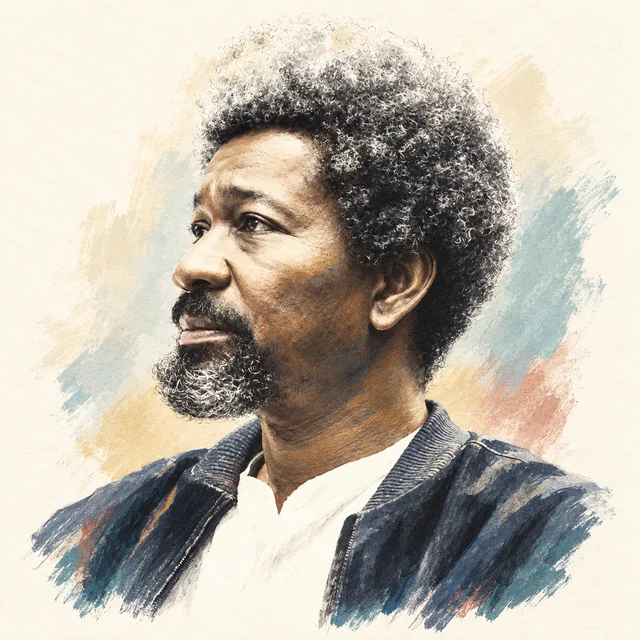
Illustrated portrait of Wole Soyinka

Wole Soyinka

Prize share · 1

Soyinka’s dramatic and literary work brings Yoruba traditions into conversation with world theatre, myth and modern political power. Plays such as Death and the King’s Horseman explore responsibility and relations between the living, the dead and the community; his range also includes satire, poetry and autobiographical prose. The prize recognised his body of literature, not only one play or his political activism. He received the full Literature Prize.

Read the biography ↗

03 · Years in the making

The path here

  1. 1957

    Soyinka graduates in English at Leeds.

  2. 1960

    A Dance of the Forests is performed in Nigeria.

  3. 1972

    The prison memoir The Man Died is published.

  4. 1986

    His dramatic and literary achievement receives the Literature Prize.

04 · Read further

From the original sources

Original explanations by Curionode, based on the official records below. Biographical details and affiliations refer to the award year.

  1. Official announcement nobelprize.org
  2. Leeds honorary degree citation for Soyinka (1973) lucas.leeds.ac.uk
  3. Chinese play-title reference: China Writers Association chinawriter.com.cn

More in Literature

Browse this subject ↗