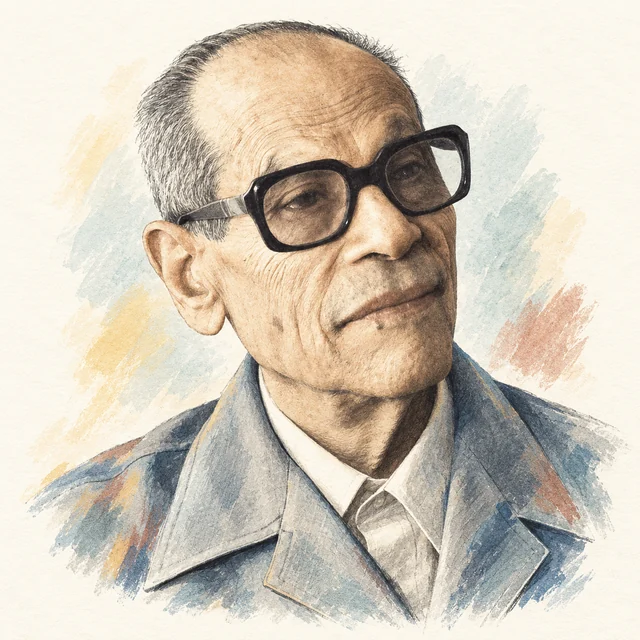
A life in context
The person behind the prize
Mahfouz grew up in Cairo and graduated in philosophy in 1934. He combined writing with civil-service work until retirement in 1972, including work in cultural administration and film censorship. Early historical novels gave way to portrayals of Cairo neighbourhoods and families. Midaq Alley appeared in 1947 and the Cairo Trilogy in 1956–1957. Later work used allegory and experimental forms, including Children of Gebelawi, The Thief and the Dogs and Miramar. Publication and censorship disputes accompanied his career. He became the first Arabic-language Literature laureate.
The contribution
Mahfouz made ordinary lives, family tensions and social change central to a large body of Arabic fiction. Realist scenes coexist with symbolic and questioning narratives. His achievement includes sustained portrayals of a changing city and experiments in how stories can examine belief, authority and freedom. The award recognised his literary work as a whole, rather than treating novels as factual reports on every Egyptian or Arab community.
The idea in plain language
Mahfouz gave a changing Cairo many voices. His novels follow households, streets and competing hopes, linking intimate choices to social pressures. Midaq Alley and the Cairo Trilogy offer different scales of this attention: a neighbourhood and a family across generations.
Read the full award story ↗

