A life in context
The person behind the prize
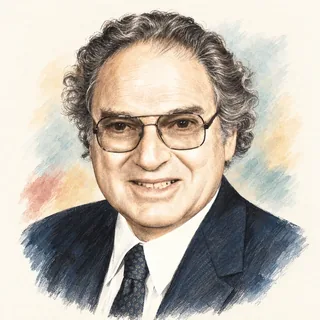
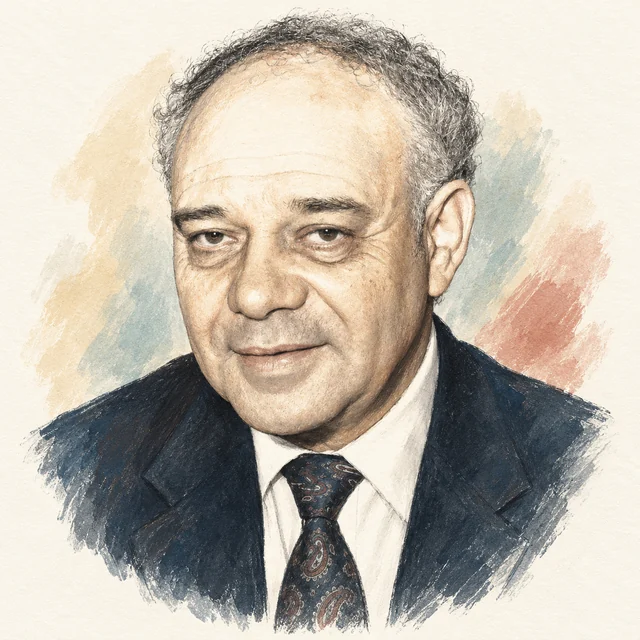
Karle entered City College in 1933 and earned a Harvard master’s degree in biology in 1938. At Michigan he studied physical chemistry with Lawrence Brockway; his doctoral work was completed in 1943 and the degree awarded in 1944. He married fellow scientist Isabella Lugoski in 1942. They worked on the Manhattan Project and later joined the Naval Research Laboratory in 1946. Collaboration with Hauptman began in 1947. Isabella Karle’s experimental work was crucial in demonstrating and extending the practical methods, including symbolic addition and structures without inversion symmetry. Karle continued theoretical and experimental crystallography with many colleagues.
The contribution
Karle linked physical constraints on electron density with mathematical phase relationships. His work with Hauptman made direct methods powerful tools for solving crystal structures from measured diffraction intensities. Experimental validation, notably by Isabella Karle, helped turn theory into practice. He received one half of the Chemistry Prize; Isabella’s important contribution did not make her an additional recipient of this award.
The idea in plain language
X-rays scattered by a crystal make a diffraction pattern. Detectors measure the intensities of the spots, which tell us about the magnitudes of scattered waves. A reconstruction also needs their relative phases, information usually absent from those intensity measurements. This is the crystallographic phase problem.
Read the full award story ↗