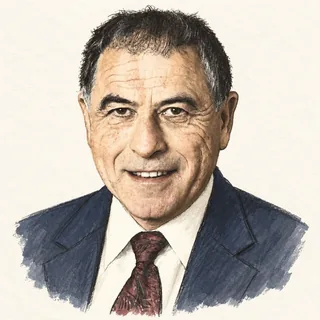
A life in context
The person behind the prize
Fenn earned his chemistry doctorate at Yale in 1940. His long research career included work on molecular beams, professorship at Yale and, from 1994, research at Virginia Commonwealth University. His prize-winning work addressed a practical obstacle in chemical measurement: proteins could be destroyed by attempts to turn them into the free, charged particles that a mass spectrometer needs. He showed that a carefully controlled spray offered another route.
The contribution
In work published in 1988, Fenn and his collaborators demonstrated electrospray ionisation for large molecules, including proteins. An electric field creates charged droplets; as solvent is lost, gas-phase molecular ions can emerge without breaking the molecules into small fragments. A protein can carry several charges, bringing its mass-to-charge ratio within the instrument’s range. This helped make mass spectrometry a central tool for studying biological macromolecules.
The idea in plain language
A protein is a large molecule whose identity, shape and interactions matter for its function. Mass spectrometry measures ions by their mass-to-charge ratio, but getting a fragile protein into the gas phase without extensive fragmentation was a major obstacle. Fenn’s electrospray and Tanaka’s soft laser desorption provided different ways to produce large molecular ions that an instrument could analyse.
Read the full award story ↗