A life in context
The person behind the prize
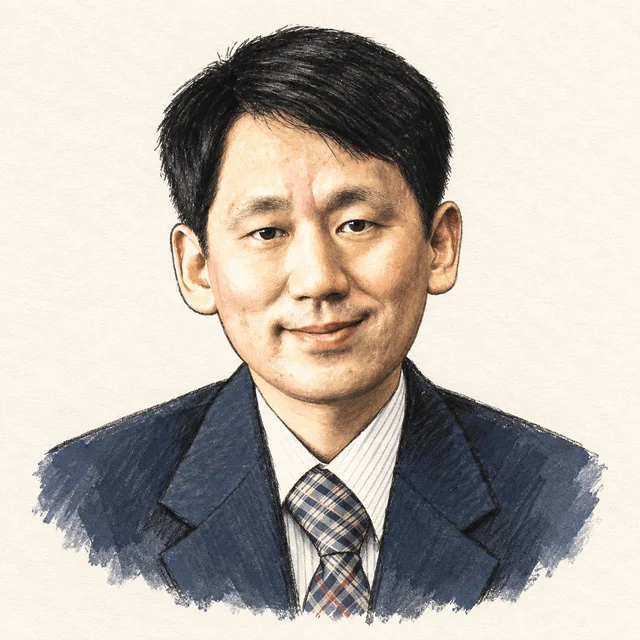
Tanaka studied electrical engineering at Tohoku University and joined Shimadzu in 1983. Working in an instrument-development team, he moved into experiments on chemical samples despite having trained in a different discipline. His contribution grew from this practical setting: finding conditions under which a laser could release large molecules for measurement. At the time of the prize he remained an engineer at Shimadzu in Kyoto.
The contribution
Tanaka demonstrated in 1987 that suitable sample preparation and laser irradiation could release intact protein ions into the gas phase. These ions could then be analysed by mass spectrometry. The achievement was not to smash proteins into pieces, but to transfer sufficiently large molecules gently enough for measurement. His soft laser desorption work helped establish an important route to biological mass spectrometry; later laser-based methods have their own distinct development histories.
The idea in plain language
A protein is a large molecule whose identity, shape and interactions matter for its function. Mass spectrometry measures ions by their mass-to-charge ratio, but getting a fragile protein into the gas phase without extensive fragmentation was a major obstacle. Fenn’s electrospray and Tanaka’s soft laser desorption provided different ways to produce large molecular ions that an instrument could analyse.
Read the full award story ↗