A life in context
The person behind the prize
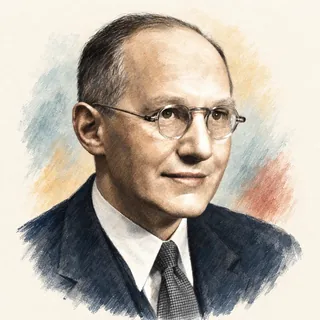
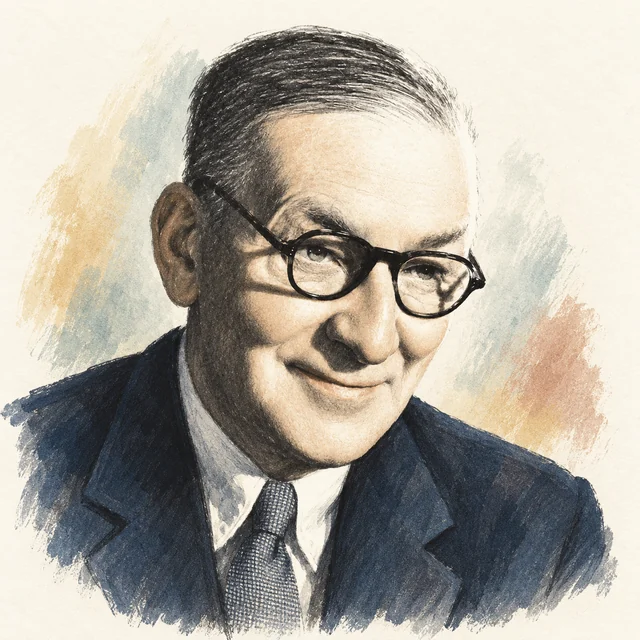
Cockcroft studied mathematics at Manchester before wartime service in the Royal Field Artillery, then trained in electrical engineering and worked with Metropolitan-Vickers. He completed the Cambridge Mathematical Tripos in 1924 and entered research at the Cavendish Laboratory. Work with Peter Kapitsa preceded his collaboration with Ernest Walton on accelerating charged particles. In 1932 their Cambridge experiments showed that artificially accelerated protons could transform lithium nuclei, producing alpha particles. The result opened a controllable route to investigating nuclear reactions; it followed Rutherford’s earlier transmutation experiments with naturally emitted particles. Cockcroft became director of the Atomic Energy Research Establishment at Harwell in 1946, his affiliation for the 1951 prize. He and Walton received one half each. His later UK Atomic Energy Authority membership and his appointment as first Master of Churchill College in 1959 belong to subsequent history, rather than to the original experiment.
The contribution
Cockcroft and Walton pioneered nuclear transmutation using artificially accelerated particles. Their shared Cambridge experiment produced alpha particles from lithium; Cockcroft received one half of the prize.
The idea in plain language
Rutherford had already shown nuclear transmutation using particles emitted by radioactive matter. Could an electrical accelerator make particles that would bring about such changes under experimental control? Cockcroft and Walton developed an accelerator at Cambridge and in 1932 observed alpha particles from lithium bombarded by protons.
Read the full award story ↗