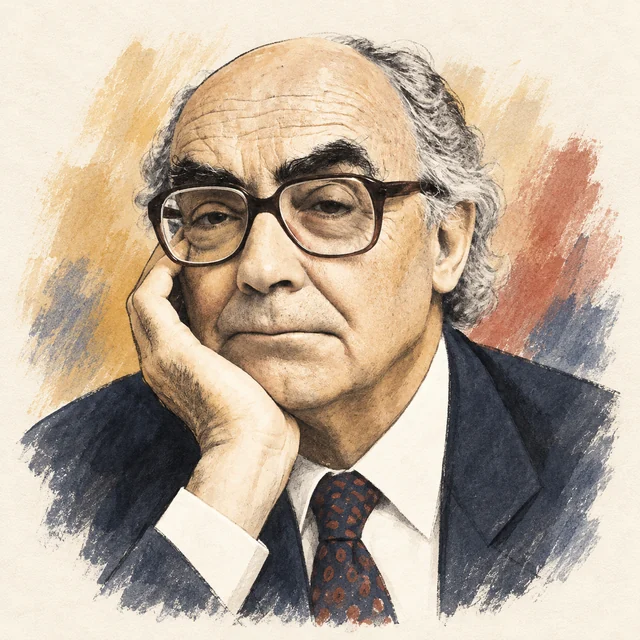
A life in context
The person behind the prize
Saramago came from a rural working-class family and worked as a mechanic, translator and journalist before becoming a full-time author in his fifties. His international breakthrough followed Baltasar and Blimunda in 1982. He later lived on Lanzarote. His politically engaged writing draws on Portuguese history while asking how ordinary people navigate power, belief and uncertainty.
The contribution
Saramago transformed improbable situations into sustained investigations of human conduct. In Blindness, an unexplained epidemic exposes both cruelty and solidarity; other novels unsettle received history and official authority. Long sentences and the blending of dialogue with narration make readers attend closely to shifting voices. The prize recognized his body of work, joining imaginative parables with compassion and irony.
The idea in plain language
An impossible event can make familiar institutions look strange. Saramago’s novels use such departures from ordinary reality to explore authority, historical memory and ethical responsibility. Baltasar and Blimunda joins individual lives to a historical world; The Year of the Death of Ricardo Reis brings literary invention into conversation with dictatorship-era Lisbon.
Read the full award story ↗

