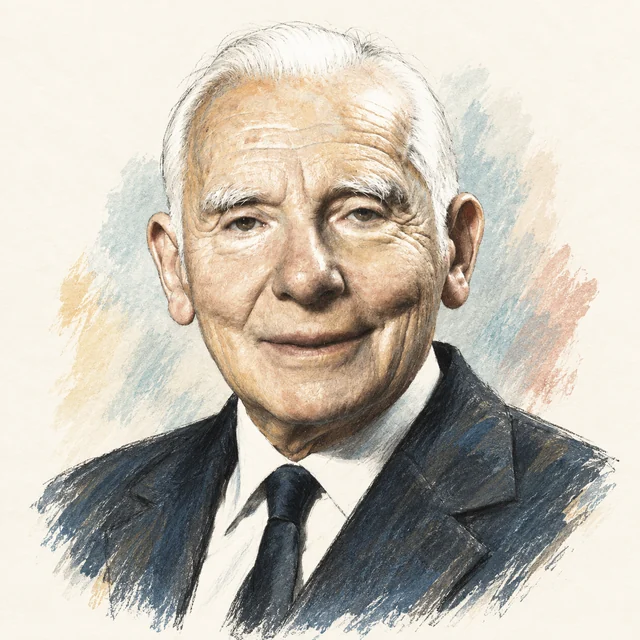
A life in context
The person behind the prize
Rotblat trained in physics in Warsaw and moved to Liverpool in 1939. During the war he worked on the atomic-bomb project, but left Los Alamos in 1944 after concluding that the feared German bomb no longer justified his participation. He later concentrated on medical physics and radiation effects. Concern about nuclear war led him to public education, the Russell–Einstein Manifesto and sustained international scientific dialogue.
The contribution
Rotblat signed the 1955 Russell–Einstein Manifesto and helped organise the first Pugwash conference in 1957. As secretary-general and later president, he helped maintain a forum where scientists could discuss nuclear dangers across political divisions. He received half the Peace Prize, while the Pugwash organisation received the other half. The recognition honoured work toward reducing nuclear weapons’ role and ultimately eliminating them, not an accomplished abolition.
The idea in plain language
The destructive power of nuclear weapons gave scientists a responsibility extending beyond laboratory discovery. The 1955 Russell–Einstein Manifesto called attention to the threat of nuclear war. The first Pugwash conference in 1957 brought researchers from different countries together to consider that danger. Scientific knowledge could provide common ground even when their governments were opponents.
Read the full award story ↗