A life in context
The person behind the prize
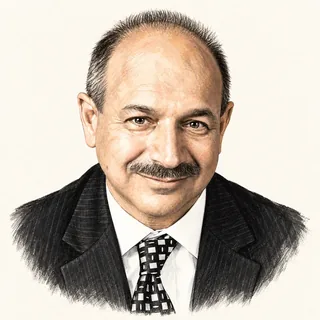
Hoffmann grew up in Luxembourg and studied biology at Strasbourg, completing his doctorate in 1969. After postdoctoral work in Marburg, he returned to Strasbourg and led research on insects and their defences against infection. His career included laboratory leadership within the French CNRS and service as president of the French Academy of Sciences in 2007–2008.
The contribution
In 1996 Hoffmann’s team, including Bruno Lemaitre, showed that the Toll signalling pathway was essential for a strong antifungal response in fruit flies. A gene already known for its role in embryonic development also helped activate immune defence. The work revealed an experimentally tractable system for understanding innate immunity and encouraged comparisons with mammalian receptors.
The idea in plain language
An immune response must begin by detecting that something needs attention. Hoffmann’s team showed that the Toll pathway, already known from fruit-fly development, was needed for an effective defence against fungal infection. Beutler’s team found that mice with an altered Tlr4 gene responded abnormally to bacterial lipopolysaccharide. Together, these lines of work revealed related molecular machinery that helps activate innate immunity, the body’s early response to microbial signals.
Read the full award story ↗