01 · The discovery
The idea, in everyday language
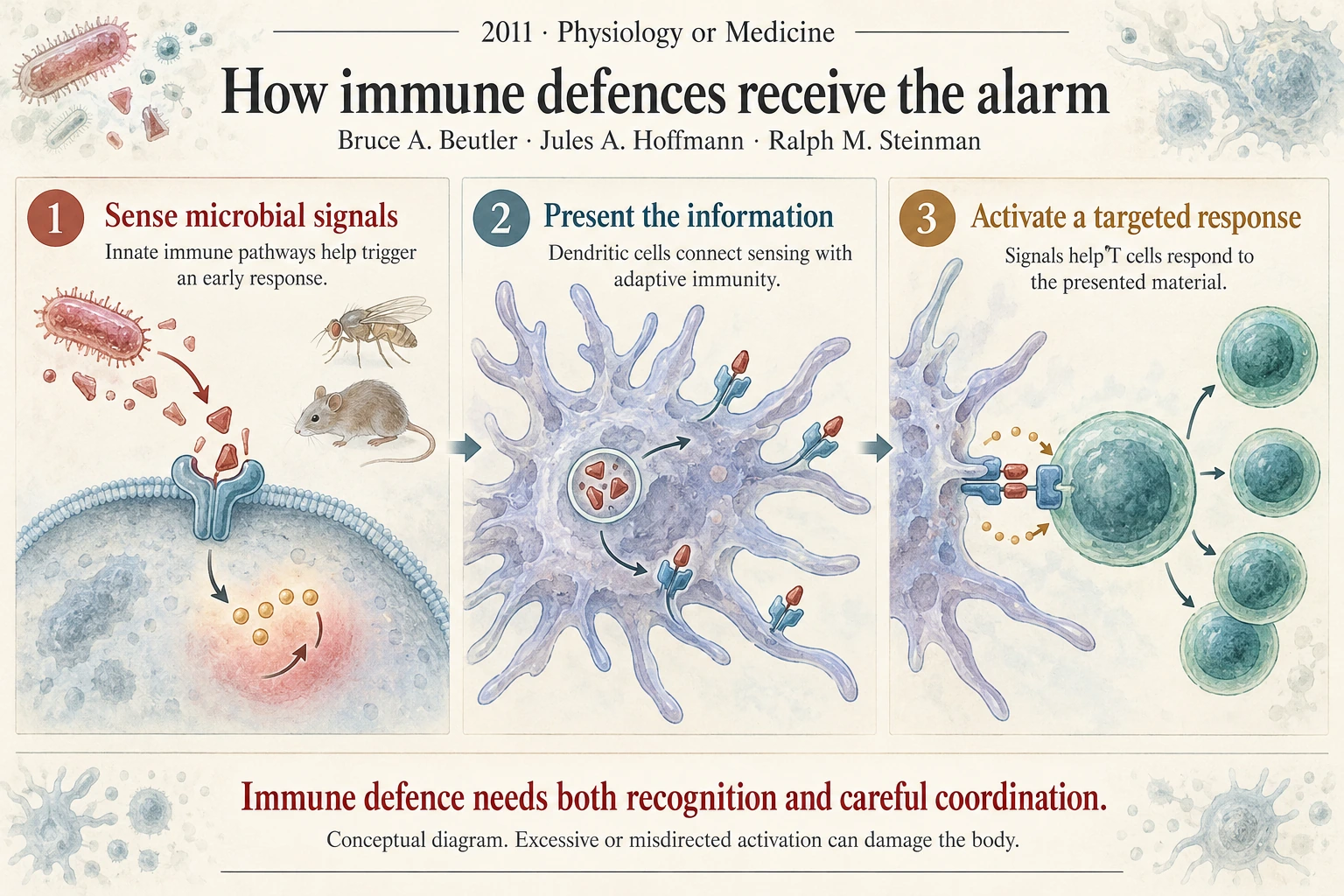
An immune response must begin by detecting that something needs attention. Hoffmann’s team showed that the Toll pathway, already known from fruit-fly development, was needed for an effective defence against fungal infection. Beutler’s team found that mice with an altered Tlr4 gene responded abnormally to bacterial lipopolysaccharide. Together, these lines of work revealed related molecular machinery that helps activate innate immunity, the body’s early response to microbial signals.
Steinman discovered dendritic cells and investigated their ability to activate T cells. These branching immune cells collect and present material to the adaptive immune system, which can make highly specific responses and retain memory. Their state and the signals they receive help determine whether and how T cells respond. This provided an important connection between early detection and a later, specialised response.
Why it matters
The findings gave researchers ways to investigate why infections trigger inflammation, how vaccines activate responses and how immunity can be directed against tumours. They also helped explain why activating immunity is not always beneficial. Understanding the signals and the cells that interpret them is essential to studying both effective defence and inflammatory disease.