01 · The discovery
The idea, in everyday language
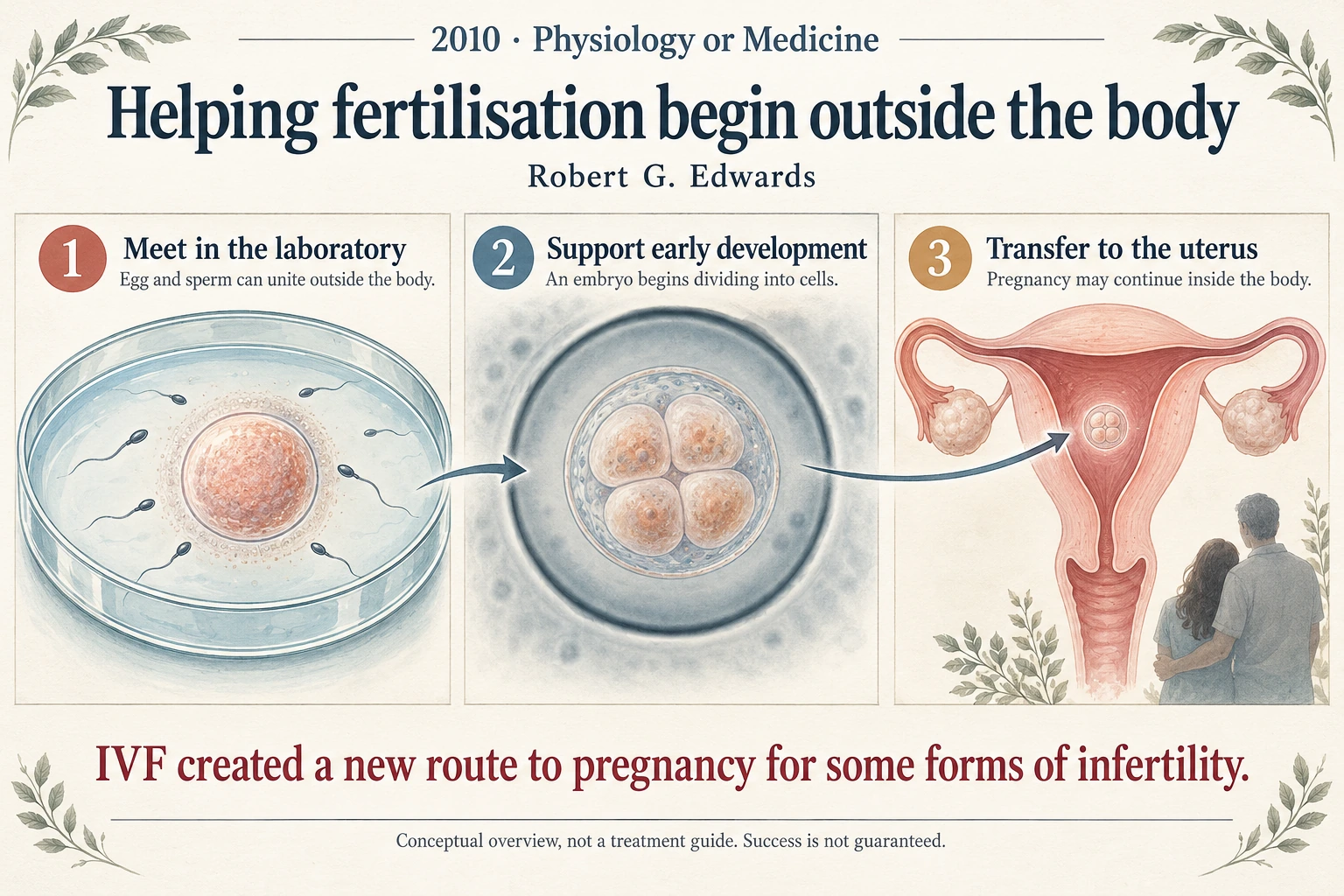
In ordinary reproduction, sperm and egg usually meet in a fallopian tube before the early embryo reaches the uterus. A blockage can prevent that meeting. Edwards asked whether human eggs could mature and be fertilised outside the body, with early development supported in the laboratory. The challenge was understanding the biology well enough for an embryo to continue developing after transfer.
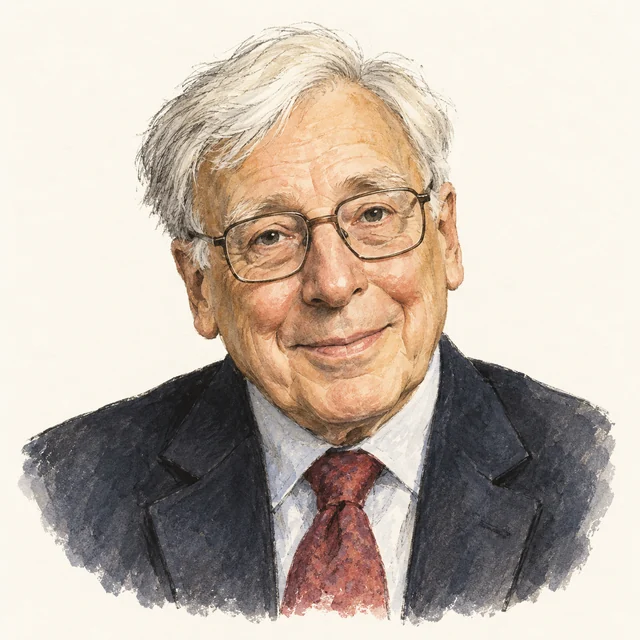
Working with Patrick Steptoe and Jean Purdy, he helped turn that idea into in vitro fertilisation. Eggs and sperm meet under laboratory conditions; an early embryo can then be transferred into the uterus. Louise Brown’s birth in 1978 demonstrated that this route could lead to a live birth. Pregnancy still develops inside the body: a “test-tube baby” is not grown to birth in a test tube.
Why it matters
IVF became the foundation of a major field of assisted reproduction and offered a route to parenthood for people facing some forms of infertility. The work also advanced understanding of eggs, fertilisation and early embryos. Its history includes patients, clinicians, embryologists and laboratory staff, alongside the scientist who received the prize.