A life in context
The person behind the prize
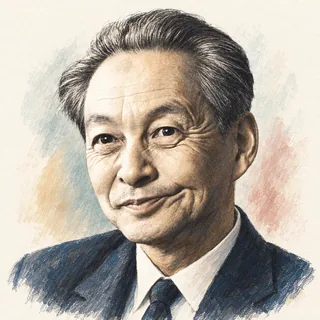
Schwinger’s intense early interest in physics led to publication as a teenager. With support from I. I. Rabi, he moved to Columbia, receiving his doctorate in 1939 despite having written the thesis earlier. He worked at Berkeley and Purdue before wartime radar research at MIT. Electromagnetic engineering and radiation problems helped shape his treatment of field effects on particle properties. After the war he joined Harvard and became a full professor two years later. His methods reformulated quantum electrodynamics and produced the leading correction to the electron’s magnetic moment. They helped make the theory both consistent with relativity and useful for calculation. Harvard was his 1965 affiliation. His later source theory and books are separate from the earlier research recognised by the prize.
The contribution
Schwinger developed quantum-electrodynamic methods and explained the electron’s anomalous magnetic moment. He received one third of the Physics Prize.
The idea in plain language
Quantum electrodynamics combined quantum theory with relativity, but early calculations of corrections to electron properties produced troublesome infinities. Experiments such as the Lamb shift and measurements of the electron’s magnetic moment demanded a workable theory.
Read the full award story ↗