A life in context
The person behind the prize
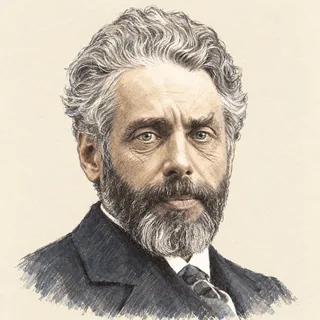
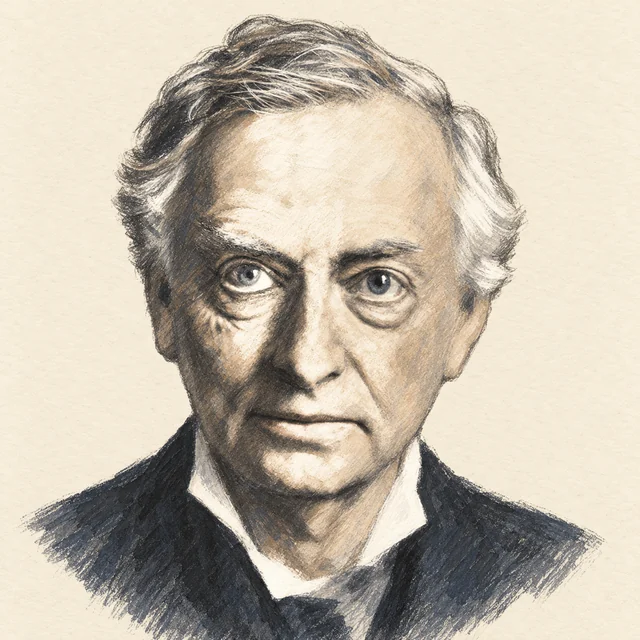
Gjellerup was born in the Roholte vicarage and, after his father’s early death, grew up in the Copenhagen household of the clergyman and writer Johannes Fibiger. He completed theological studies in 1878, but chose a literary career. His debut, En idealist, appeared that year under a pseudonym. Early writing engaged with naturalism, Darwin and Georg Brandes’s literary circle; his outlook later moved towards German idealism and philosophical and religious questions. He worked across poetry, plays, stories and novels rather than in one genre. Brynhild appeared in 1884 and Minna in 1889. The latter is a love story, distinct from the later fiction inspired by Buddhist ideas. After earlier stays in Germany, he settled in Dresden in March 1892, as his autobiographical account states. He increasingly wrote in German as well as Danish. Der Pilger Kamanita, published in 1906, belongs to that later philosophical fiction. The 1917 Literature Prize was divided equally between him and Henrik Pontoppidan, with separate reasons for each writer’s recognition. The official award record lists Denmark; his life and writing also had substantial German connections. He died in Klotzsche near Dresden in 1919. His career shows a changing search for ideals, and the award concerns his body of work rather than a single jointly written book.
The contribution
Gjellerup received half the Literature Prize for the range and richness of his writing and its pursuit of ideals. His contribution belongs to his own poetry, drama and fiction, distinct from Pontoppidan’s portrayal of Danish society.
The idea in plain language
Gjellerup’s writing moved through changing philosophical commitments and literary forms. Poetry and drama, alongside novels such as Minna and the later Der Pilger Kamanita, made different contributions to his work. The award recognised his varied writing and ideal aspirations, rather than naming one book as its sole object. His later interest in Buddhist ideas should not be projected onto every earlier work.
Read the full award story ↗