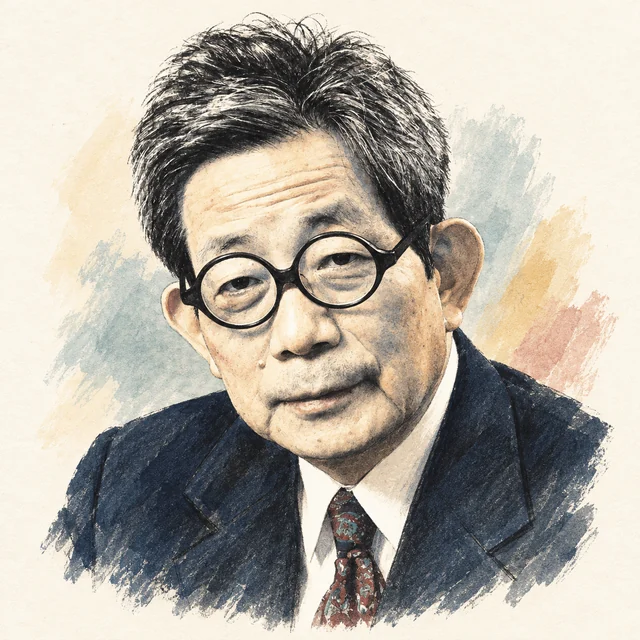
A life in context
The person behind the prize
Oe grew up in a forested part of Shikoku, hearing family stories and experiencing Japan’s wartime defeat as a child. At Tokyo University he studied French literature and encountered writers whose ideas shaped his fiction. The birth of his son Hikari transformed his life and writing, bringing care and responsibility into relation with wider questions of violence and society. His work includes novels, stories and essays rather than a single literary form.
The contribution
Oe created imagined worlds in which personal experience and local myth confront the pressures of modern history. A Personal Matter, published in 1964, explores responsibility through fiction, while The Silent Cry combines family conflict with collective memory. His essays also addressed Hiroshima and Okinawa. The Nobel award recognised the force and range of this body of work, not a documentary account of his family or an endorsement of every narrator’s choices.
The idea in plain language
How can a personal crisis become a question about the wider human condition? Oe’s fiction explores that possibility without making an individual life a simple example of a moral rule. Characters face dependency, fear, shame and responsibility in imagined worlds shaped by rural memory and the pressures of modern Japan. The familiar can become disturbing when myth, fantasy and social reality overlap.
Read the full award story ↗

