A life in context
The person behind the prize
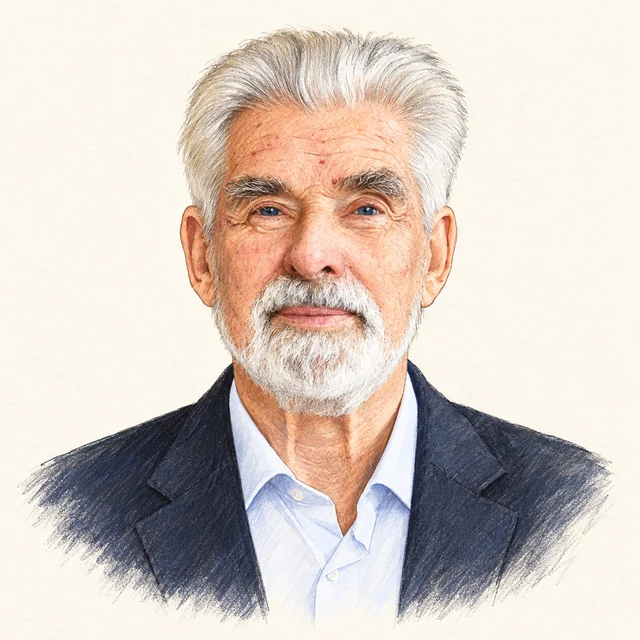
Hasselmann earned his doctorate at the University of Göttingen in 1958. His work connected mathematical physics, the ocean and the atmosphere, asking how irregular short-term motion can produce slower, measurable changes. At the award he was affiliated with the Max Planck Institute for Meteorology in Hamburg. He helped make the distinction between changing weather and changing climate scientifically precise.
The contribution
He developed models linking fast weather fluctuations to slower climate variability, and methods for finding the distinctive fingerprints of different climate influences. These methods help separate natural variability from the effects of human activities.
The idea in plain language
A day’s weather is hard to predict far ahead, but that does not make the climate unknowable. Manabe built models of how energy enters, moves through and leaves the atmosphere. Hasselmann connected short-lived weather fluctuations to slower climate changes and developed ways to identify the fingerprints of different causes.
Read the full award story ↗