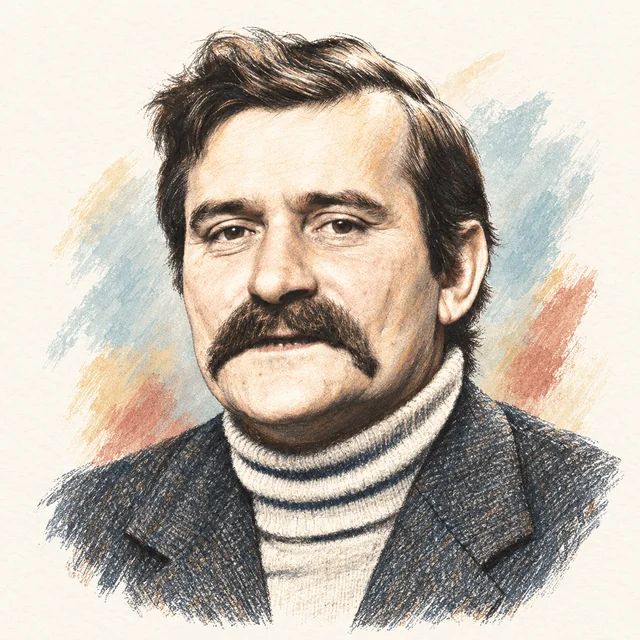
A life in context
The person behind the prize
Wałęsa trained at vocational school, worked as a mechanic and served in the army before becoming an electrician at the Gdańsk shipyard in 1967. Trade-union activity brought dismissal in 1976 and repeated detention. In August 1980 he led a shipyard strike and helped negotiate an agreement allowing an independent union. Solidarity became a mass movement, and elected him chairman in 1981. Martial law brought internment; he was released in November 1982 but remained under surveillance. The Nobel Prize came while the union was suppressed. Negotiations and partly free elections followed in 1989. His presidency, from 1990 to 1995, belonged to a later chapter.
The contribution
Wałęsa received the full Peace Prize for leadership in the nonviolent struggle for independent organisation and workers’ rights. Negotiation and collective solidarity, involving many activists and supporters, were central. He was the individual recipient; Solidarity was not the named laureate. The 1983 award did not mean political freedom had already been achieved or endorse every decision in his later presidency.
The idea in plain language
The August 1980 shipyard strike became part of a much wider wave of action in Poland. Workers demanded rights, including independent representation, and Wałęsa helped negotiate the Gdańsk Agreement. Solidarity brought together a mass membership and many organisers; its strength did not come from one person acting alone.
Read the full award story ↗

