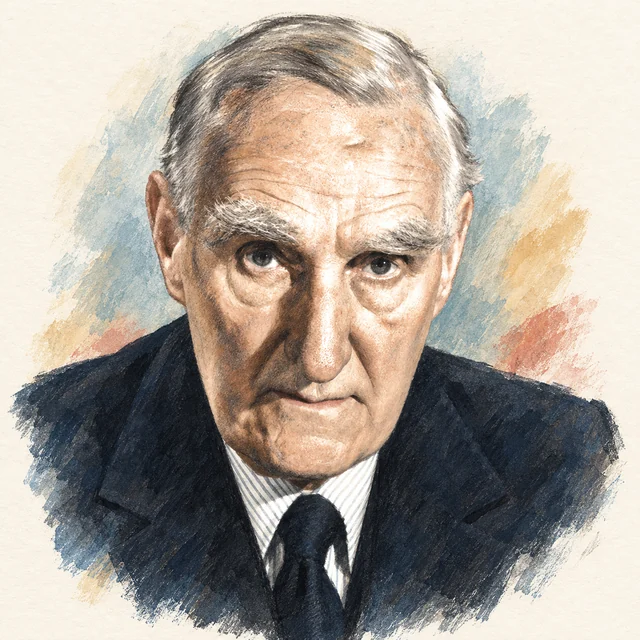
A life in context
The person behind the prize
Boyd Orr studied at Glasgow, combining an arts education with biology and medicine. He obtained his science degree in 1910 and medical qualification in 1912, followed by research degrees. His work at what became the Rowett Research Institute began before the First World War and resumed after wartime service. Research on nutrition led him to connect inadequate diets with low incomes and social conditions, rather than food production alone. Food, Health and Income appeared in 1936. He advocated international cooperation on agriculture and nutrition, becoming the first Director-General of the UN Food and Agriculture Organization in 1945. He left that office on 26 April 1948, so he was already a former director when awarded the 1949 Peace Prize. His proposed World Food Board was not realised. Elevated to the peerage in January 1949, he continued to argue that reducing hunger and want could help remove conditions that contribute to conflict. The prize recognised sustained scientific, social and international efforts, not a claim that food supply by itself guarantees peace.
The contribution
Boyd Orr linked nutritional research with economic access and international institutions, seeking to reduce hunger and deprivation as contributors to conflict. He received the full Peace Prize as a former FAO Director-General.
The idea in plain language
Why can people lack adequate food even where food is available? Boyd Orr’s research drew attention to income and access, alongside the nutritional quality of diets. His 1936 Food, Health and Income connected household circumstances with nutrition and made hunger a question of social and economic arrangements, not production alone.
Read the full award story ↗

