A life in context
The person behind the prize
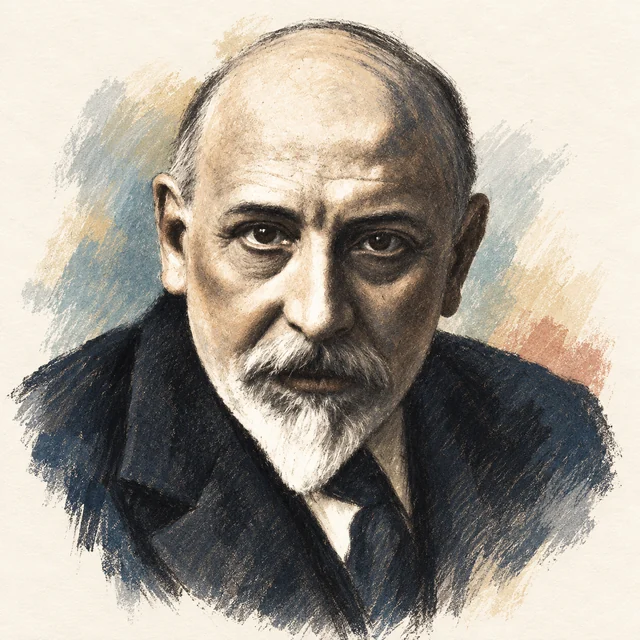
Pirandello was born in Sicily and studied philology in Rome and Bonn, completing a dissertation on his home dialect in 1891. From 1897 he taught in Rome while writing fiction, essays and drama. A financial crisis after flooding of the family’s sulphur mines in 1903 disrupted family life. The Late Mattia Pascal appeared in 1904. His theatre made identity and performance part of the action: Six Characters in Search of an Author, first staged in 1921, brings unfinished fictional characters into a rehearsal. Henry IV followed in 1922, while the novel One, None and a Hundred Thousand appeared in 1926. The 1934 Literature Prize recognized his renewal of drama. He supported Italian Fascism and donated his Nobel medal to the regime’s colonial war in Ethiopia. His artistic experiments and that political history both belong in an account of his life.
The contribution
Pirandello received the full Literature Prize for renewing dramatic and scenic art. His plays turn conflicts between identity, other people’s judgments and theatrical representation into the structure of the performance itself.
The idea in plain language
A conventional play can invite an audience to accept the stage as a self-contained world. Pirandello exposes the work of making that world. In Six Characters in Search of an Author, six fictional characters interrupt a theatrical rehearsal and insist that their unfinished drama be represented. Actors attempt to embody them, while the characters dispute whether a performance can express their experience. The boundary between the play and its making becomes the action.
Read the full award story ↗

