c.curionodeThe Nobel Archive

1934 · Literature

When the characters challenge the play

Pirandello made the theatre question its own machinery. Characters, actors and spectators confront conflicting versions of a person’s identity and of the story being performed.

MetatheatreIdentitySix CharactersItalian drama
1934Literature

Visual guide

The prize, pictured

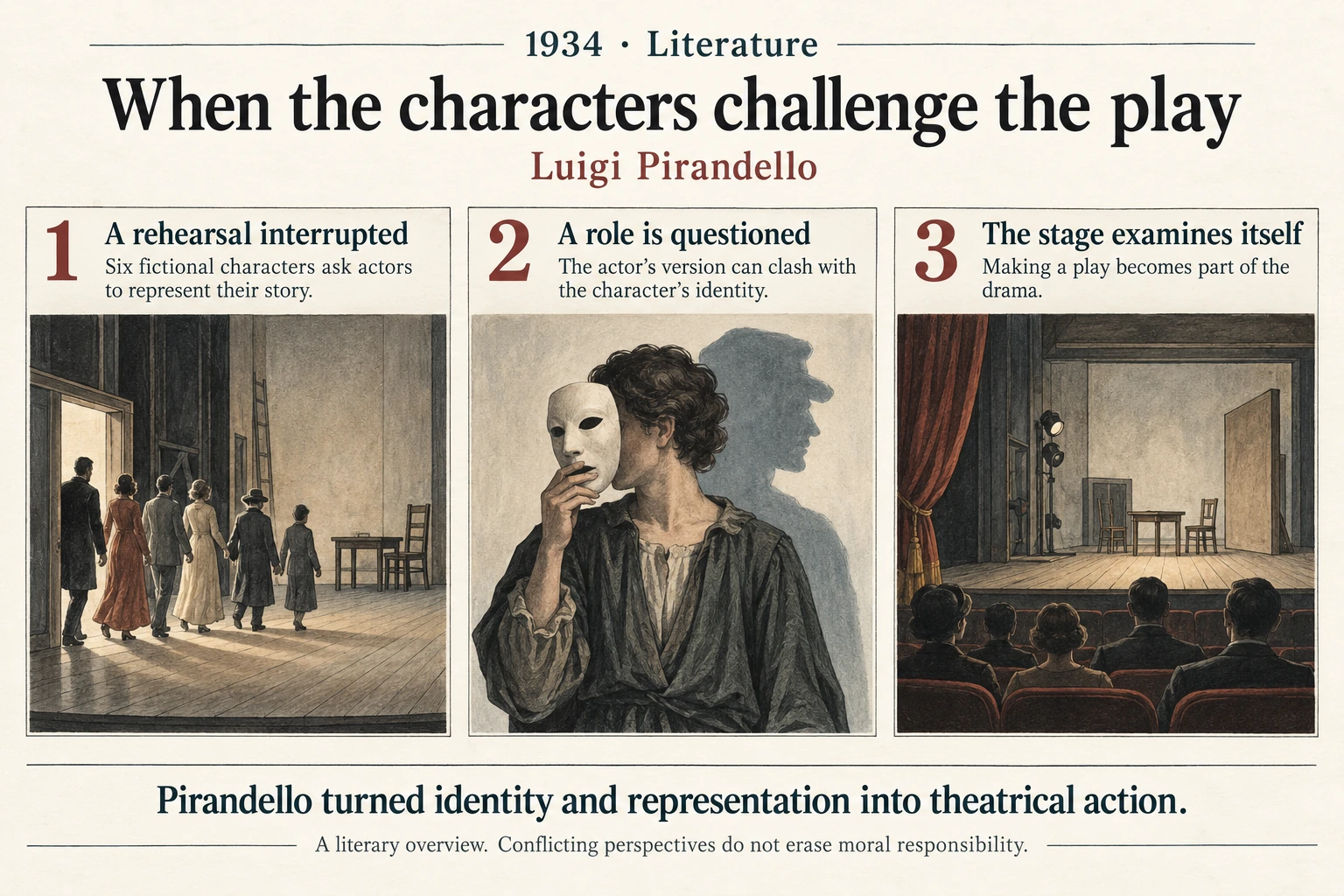
Infographic explaining When the characters challenge the play
Original AI-generated infographic. A conceptual overview; the explanations and sources below provide context.
Read the poster text

Pirandello turned identity and representation into theatrical action.

  1. A rehearsal interrupted

    Six fictional characters ask actors to represent their story.

  2. A role is questioned

    The actor’s version can clash with the character’s identity.

  3. The stage examines itself

    Making a play becomes part of the drama.

A literary overview. Conflicting perspectives do not erase moral responsibility.

01 · The contribution

The idea, in everyday language

A conventional play can invite an audience to accept the stage as a self-contained world. Pirandello exposes the work of making that world. In Six Characters in Search of an Author, six fictional characters interrupt a theatrical rehearsal and insist that their unfinished drama be represented. Actors attempt to embody them, while the characters dispute whether a performance can express their experience. The boundary between the play and its making becomes the action.

The concern extends across his writing. In Henry IV, a man’s assumed historical identity unsettles judgments about madness and deliberate performance. The Late Mattia Pascal and One, None and a Hundred Thousand also explore how social recognition can hold a person in an identity that feels inadequate. Humour and tragedy often coexist. The 1934 prize recognized a renewal of dramatic and scenic art, rather than a single philosophical proposition or one novel alone.

Why it matters

By putting the rehearsal, the role and the act of representation on stage, Pirandello expanded what modern theatre could investigate. His plays helped make the theatre’s own conventions available for dramatic conflict. Their humour and unease can lead audiences to reconsider the labels they put on others.

02 · The people

Who brought the idea to life?

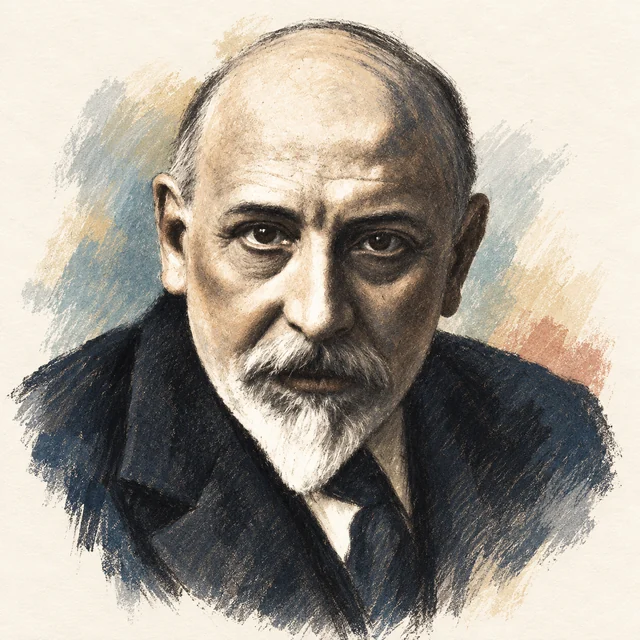
Illustrated portrait of Luigi Pirandello

Luigi Pirandello

Prize share · 1

Pirandello received the full Literature Prize for renewing dramatic and scenic art. His plays turn conflicts between identity, other people’s judgments and theatrical representation into the structure of the performance itself.

Read the biography ↗

03 · Years in the making

The path here

  1. 1904

    The Late Mattia Pascal explores identity and social recognition.

  2. 1921

    Six Characters in Search of an Author is first staged.

  3. 1922

    Henry IV develops the conflict between role and reality.

  4. 1934

    Pirandello receives the Literature Prize for renewing dramatic art.

04 · Read further

From the original sources

Original explanations by Curionode, based on the official records below. Biographical details and affiliations refer to the award year.

  1. Official award summary nobelprize.org
  2. Award ceremony speech nobelprize.org
  3. Official biography: Luigi Pirandello nobelprize.org
  4. Official facts: Luigi Pirandello nobelprize.org

More in Literature

Browse this subject ↗