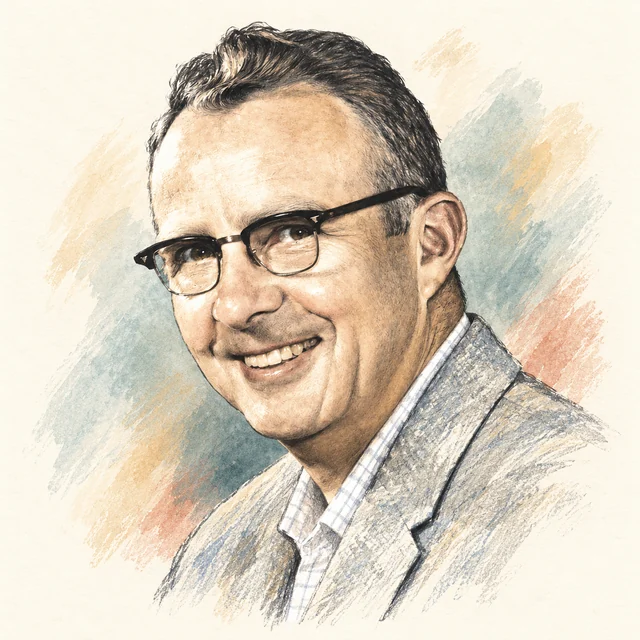
A life in context
The person behind the prize
Alvarez received his Chicago bachelor’s degree in 1932, master’s in 1934 and doctorate in 1936. He joined Berkeley’s Radiation Laboratory that year. Early research ranged from cosmic rays to nuclear physics; wartime appointments included radar research at MIT and work on the Manhattan Project. After the war, he developed accelerator and experimental techniques. Building on Donald Glaser’s invention of the bubble chamber, Alvarez’s group developed large liquid-hydrogen chambers and systems for measuring and analysing their photographs. Physicists, engineers, technicians and computer work together made very short-lived resonance states accessible through their reaction and decay products. The 1968 award recognised this combination of experimental instrumentation, analysis and particle discoveries. Berkeley was his award-year affiliation. The Nobel biography’s later honours are separate from the pre-award record.
The contribution
Alvarez developed hydrogen bubble-chamber techniques and data analysis that enabled discoveries of particle resonance states. He received the full Physics Prize.
The idea in plain language
A charged particle passing through prepared superheated liquid can leave a trail of tiny bubbles. Photographs record these tracks. Glaser invented the bubble chamber; Alvarez’s group developed liquid-hydrogen instruments and the means to handle their large photographic output.
Read the full award story ↗

