A life in context
The person behind the prize
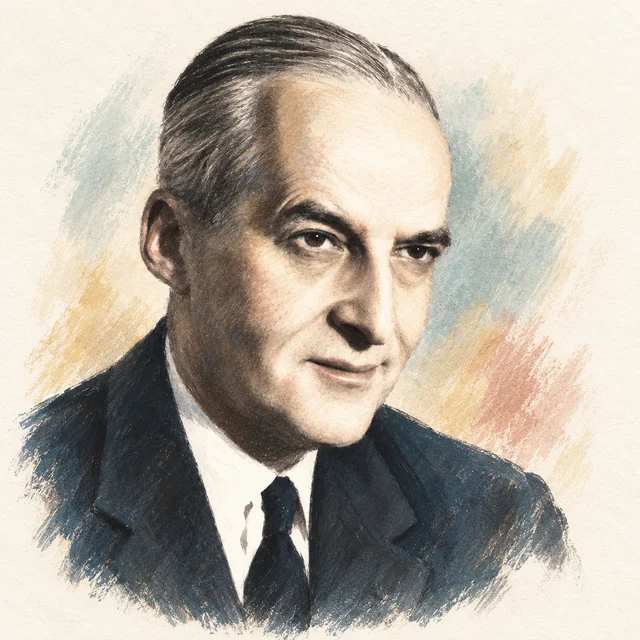
Born in Paris to Argentine parents, Leloir grew up in Buenos Aires and completed a medical degree there in 1932. Work with Bernardo Houssay introduced him to physiological research. In 1936 he studied at Cambridge’s biochemical laboratory; later visits included Carl Cori’s laboratory in St Louis and work at Columbia. Back in Argentina, he directed the Campomar Foundation’s biochemical research institute. With colleagues, investigations of galactose metabolism led to the identification of sugar nucleotides, including UDP-glucose. Further studies established their roles as sugar donors in forming compounds such as trehalose, sucrose and glycogen. These biosynthetic routes could not be understood simply by reversing known breakdown reactions. His 1970 affiliation was the Buenos Aires institute. The prize recognised sugar nucleotides and their functions in carbohydrate biosynthesis; collaborators and subsequent research extended that programme.
The contribution
Leloir discovered sugar nucleotides and established their roles in carbohydrate biosynthesis. He received the entire Chemistry Prize.
The idea in plain language
Investigations of galactose metabolism revealed that a sugar’s conversion depended on an additional compound. Leloir and colleagues identified nucleotide-linked sugars, including UDP-glucose. Linking the sugar to a nucleotide created a chemically useful donor form that enzymes could recognise and use.
Read the full award story ↗

