A life in context
The person behind the prize
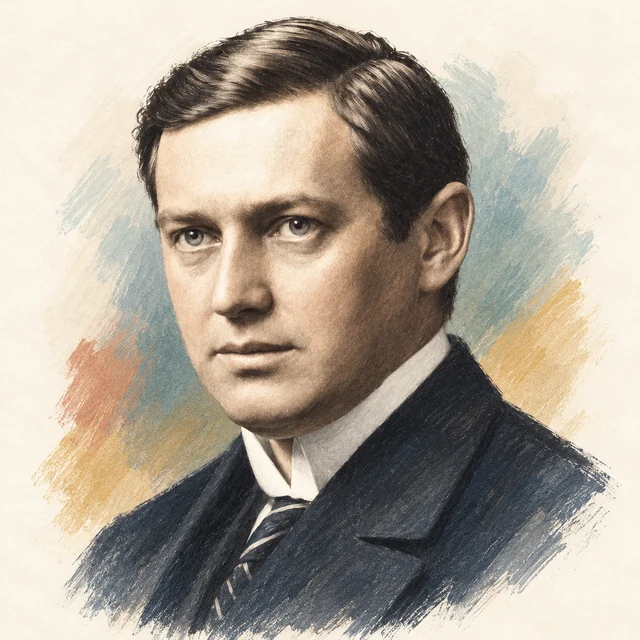
Siegbahn was born in Örebro and entered Lund University in 1906. As an assistant to Johannes Rydberg, he developed his experimental skills and completed a doctorate in 1911 on magnetic-field measurements. He then turned towards X-ray spectroscopy, improving the instruments needed to separate and measure characteristic radiation from different elements. Better vacuum equipment, X-ray tubes and spectrographs made faint lines accessible and allowed more exact wavelength comparisons. Appointed professor at Lund in 1920, he moved to Uppsala in 1923 and held that affiliation for his full 1924 Physics Prize, presented in 1925. The work built on earlier discoveries by other investigators rather than introducing X-rays or crystal spectroscopy for the first time. His measurements and work with students helped physicists test ideas about the inner electronic structure of atoms. From 1937 he directed the Nobel Institute for Physics in Stockholm and developed a later programme of nuclear research; that later work was separate from the basis of his 1924 prize. He died in 1978. His son Kai also received a Physics Prize, in 1981, for a different form of spectroscopy.
The contribution
Siegbahn received the full Physics Prize for discoveries and research in X-ray spectroscopy. He refined the apparatus and wavelength measurements, found additional spectral lines and supplied evidence for studying atomic electron energy levels.
The idea in plain language
Elements can emit characteristic X-rays, with particular wavelengths appearing as lines in a spectrum. Those patterns offered clues to atomic structure, but weak lines and imperfect instruments limited what researchers could distinguish. Siegbahn improved the vacuum equipment, X-ray sources and spectrographs needed to make reliable comparisons.
Read the full award story ↗

