A life in context
The person behind the prize
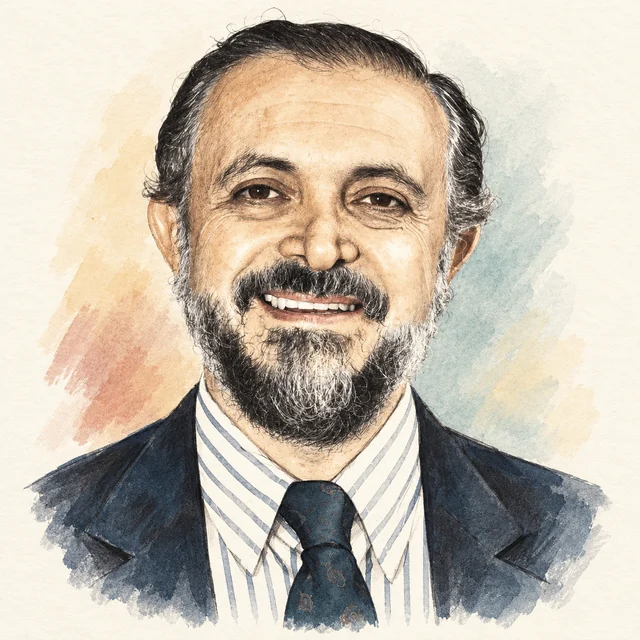
Molina grew up in Mexico City, experimenting with a chemistry set and a microscope. Chemical-engineering study in Mexico and research in Germany preceded a doctorate in physical chemistry at Berkeley. In 1973 he joined Rowland as a postdoctoral researcher at Irvine. Asking what happened to seemingly inert industrial gases brought him into atmospheric chemistry. Later work at the Jet Propulsion Laboratory and MIT combined experiments with environmental questions.
The contribution
Molina and Rowland proposed in 1974 that chlorofluorocarbons could survive in the lower atmosphere, reach the stratosphere and release chlorine under ultraviolet light. Chlorine could then catalytically destroy ozone. Molina also investigated reactions important to polar ozone depletion, including chemistry on icy surfaces. His contribution connected molecular processes to a global environmental risk, rather than treating chemical stability near the ground as proof of safety everywhere.
The idea in plain language
Ozone in the stratosphere absorbs much harmful ultraviolet radiation. Its amount depends on competing reactions that create and destroy it. Crutzen showed in 1970 how nitrogen oxides participate in catalytic ozone destruction: a reactive substance is regenerated and can repeat the process. Understanding these cycles made it possible to ask how small concentrations could have large consequences.
Read the full award story ↗