A life in context
The person behind the prize
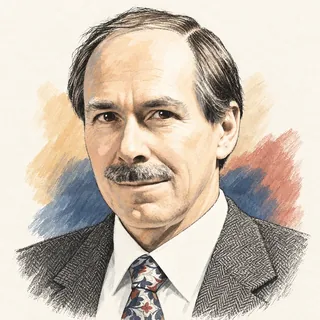
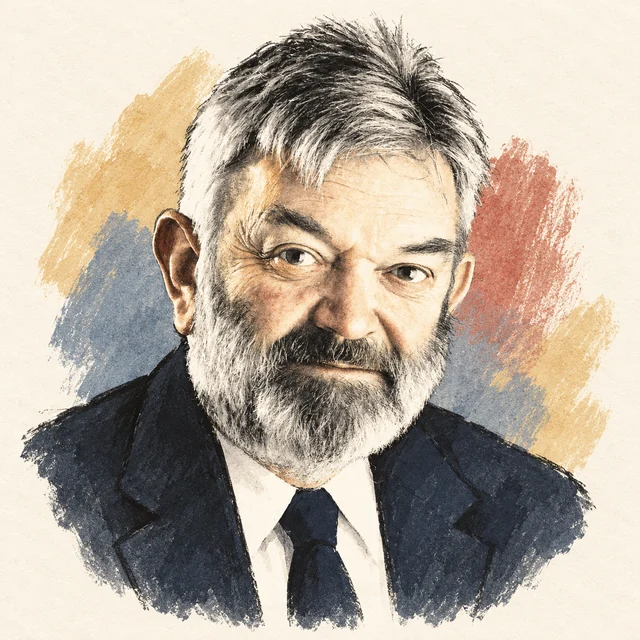
Veltman grew up in Waalwijk, where electronics and radio repair became early interests. He studied at Utrecht, worked at CERN and became a professor at Utrecht before moving to Michigan in 1981. He retired in 1996 and returned to the Netherlands. His research joined theoretical insight with practical tools: his Schoonschip program automated complicated symbolic algebra at a time when that was an unusual use of computers.
The contribution
Veltman pursued the renormalization of non-Abelian gauge theories and provided the research setting and symbolic-computation tools for his student ’t Hooft’s breakthrough. Together they tested the results and developed detailed methods for calculating quantum corrections in the electroweak theory. These corrections allowed precision measurements to test the theory and constrain properties of particles not yet directly observed.
The idea in plain language
The electroweak theory described two forces within a common mathematical framework, but calculating quantum corrections could produce divergent expressions. A theory that describes a pattern without yielding usable numbers cannot face a precision test. The challenge was to show that its complicated corrections could be handled consistently while keeping a finite set of measurable inputs.
Read the full award story ↗