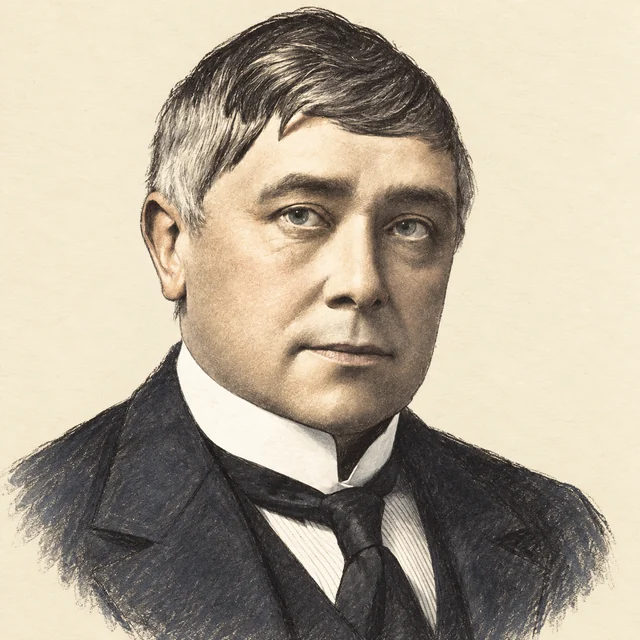
A life in context
The person behind the prize
Maurice Maeterlinck grew up in a prosperous French-speaking family in Ghent, studied law and briefly practised as a lawyer before choosing literature. Parisian literary circles, especially Villiers de l’Isle-Adam, helped shape his Symbolist interests. In 1889 he published the poetry collection Serres chaudes and the play La Princesse Maleine. The Intruder and The Blind followed in 1890, and Pelléas et Mélisande in 1892. Their restrained action, silences and unseen threats shifted attention towards anticipation and inner experience. From the 1890s he lived mainly in France; the official award record nevertheless identifies his country as Belgium. His relationship with the singer and performer Georgette Leblanc influenced his work and its theatrical life. Essays such as The Treasure of the Humble accompanied the plays. The Life of the Bee appeared in 1901 as literary reflection on nature, rather than an original scientific discovery. The Blue Bird had its world premiere in Moscow in 1908 and reached the Paris stage in 1911. The Nobel Prize honoured his varied literary achievement, especially drama, rather than that play alone. He was made a count in 1932, so that title does not describe his rank in 1911. After wartime exile in the United States, he returned to France and died in Nice in 1949.
The contribution
Maeterlinck received the full Literature Prize for a wide literary achievement, particularly dramatic works rich in imagination and poetic expression. He made silence, uncertainty and suggestion active forces on the stage.
The idea in plain language
A play need not depend only on visible conflict and decisive action. In The Intruder and The Blind, waiting and incomplete knowledge give ordinary sounds and pauses unusual force. Characters encounter things they cannot fully understand or control. The audience’s attention moves towards apprehension and inner experience; a silence can matter as much as an event shown onstage.
Read the full award story ↗

