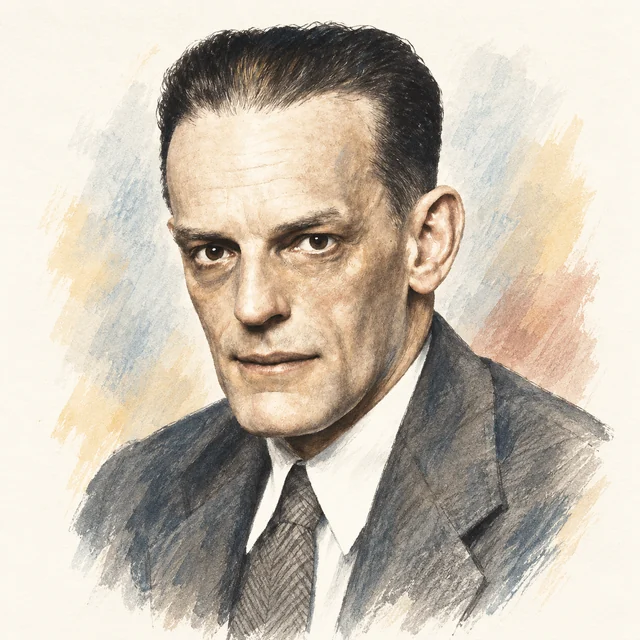
A life in context
The person behind the prize
Theiler studied medicine in South Africa and continued at St Thomas’ Hospital and the London School of Tropical Medicine. He obtained medical qualifications in 1922 and joined Harvard’s Department of Tropical Medicine. His 1930 mouse-model work made yellow fever more accessible to experimental study. That year he moved to the Rockefeller Foundation’s International Health Division laboratories in New York, located on the Rockefeller Institute campus. The foundation and the institute were distinct organisations. With colleagues including Hugh H. Smith, he developed the live attenuated 17D vaccine; their human-immunisation report appeared in 1937. Earlier investigations and the vaccine work were different stages of a wider research programme. In 1951 he became director of laboratories in the foundation’s Division of Medicine and Public Health, his award affiliation. Theiler alone received the Medicine Prize, but the vaccine’s development and implementation involved many collaborators. His London medical qualifications were not a research doctorate.
The contribution
Theiler advanced yellow-fever research and developed the live attenuated 17D vaccine with colleagues including Hugh H. Smith. He was the sole recipient of the 1951 Medicine Prize.
The idea in plain language
Yellow fever is a viral disease primarily transmitted by infected mosquitoes. Earlier researchers had established the mosquito connection; Theiler did not discover that route of transmission. His 1930 work with a mouse model enabled more extensive experimental investigation, while subsequent studies examined how altered virus strains could induce protection.
Read the full award story ↗

