c.curionodeThe Nobel Archive

1951 · Physiology or Medicine

From yellow-fever research to preventive immunity

Theiler’s investigations and the live attenuated 17D vaccine helped turn understanding of yellow fever into prevention.

Yellow feverLive attenuated vaccinePreventive immunity
1951Physiology or Medicine

Visual guide

The prize, pictured

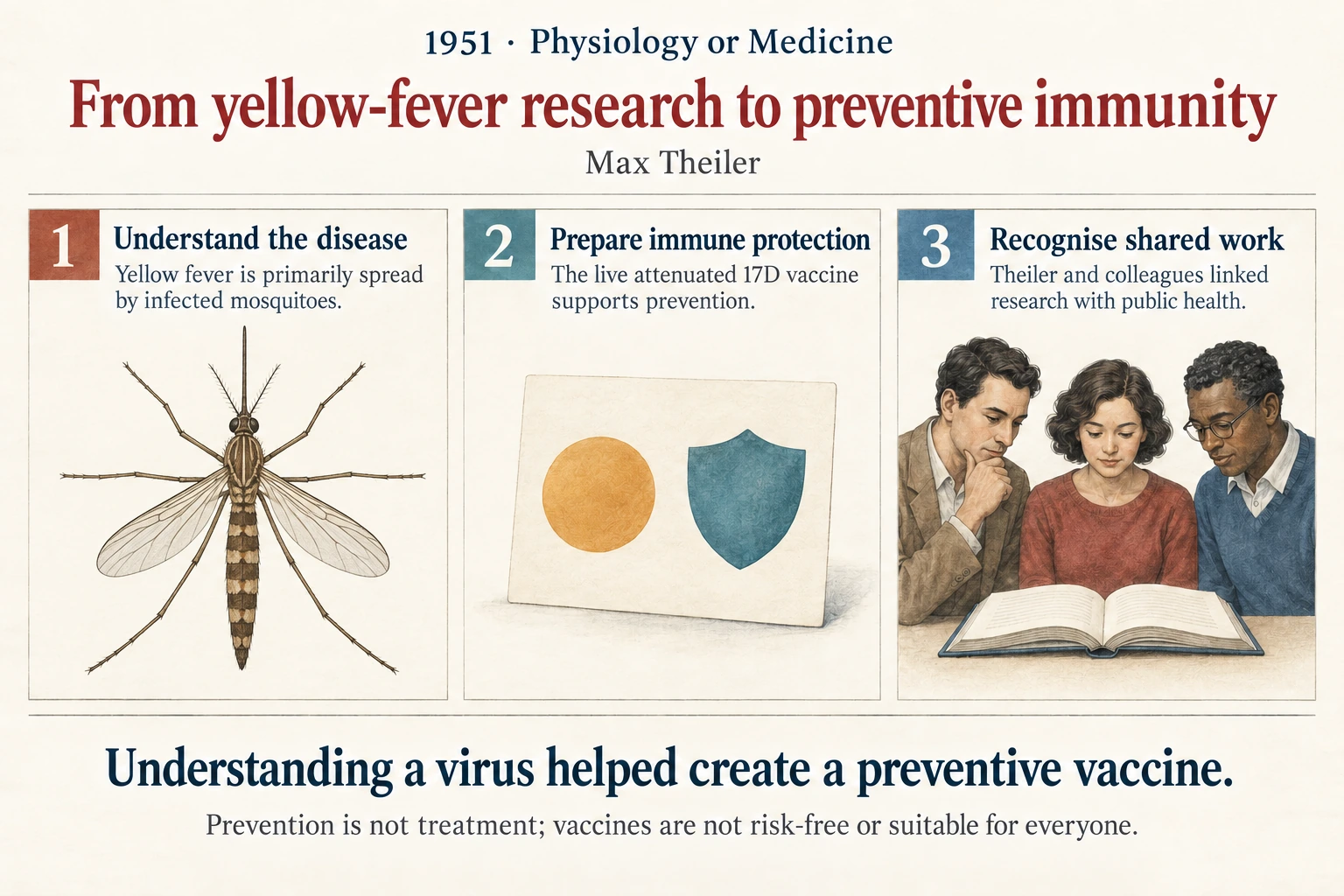
Infographic explaining From yellow-fever research to preventive immunity
Original AI-generated infographic. A conceptual overview; the explanations and sources below provide context.
Read the poster text

Understanding a virus helped create a preventive vaccine.

  1. Understand the disease

    Yellow fever is primarily spread by infected mosquitoes.

  2. Prepare immune protection

    The live attenuated 17D vaccine supports prevention.

  3. Recognise shared work

    Theiler and colleagues linked research with public health.

Prevention is not treatment; vaccines are not risk-free or suitable for everyone.

01 · The discovery

The idea, in everyday language

Yellow fever is a viral disease primarily transmitted by infected mosquitoes. Earlier researchers had established the mosquito connection; Theiler did not discover that route of transmission. His 1930 work with a mouse model enabled more extensive experimental investigation, while subsequent studies examined how altered virus strains could induce protection.

The 17D vaccine uses a live attenuated virus: its capacity to cause disease is reduced while it can stimulate an immune response. Theiler and Hugh H. Smith published their human-immunisation work in 1937. This was a later step in a collaborative programme, not simply the earlier mouse-adapted strain renamed. The 1951 award recognised Theiler’s discoveries concerning yellow fever and ways to combat it.

Why it matters

The work provided a major preventive tool and a model for linking virology with vaccine development. Theiler alone received the prize; Smith and other researchers, health workers and participating communities contributed to development and use. Research at the Rockefeller Foundation should be distinguished from the separate Rockefeller Institute whose campus housed the laboratories.
02 · The people

Who brought the idea to life?

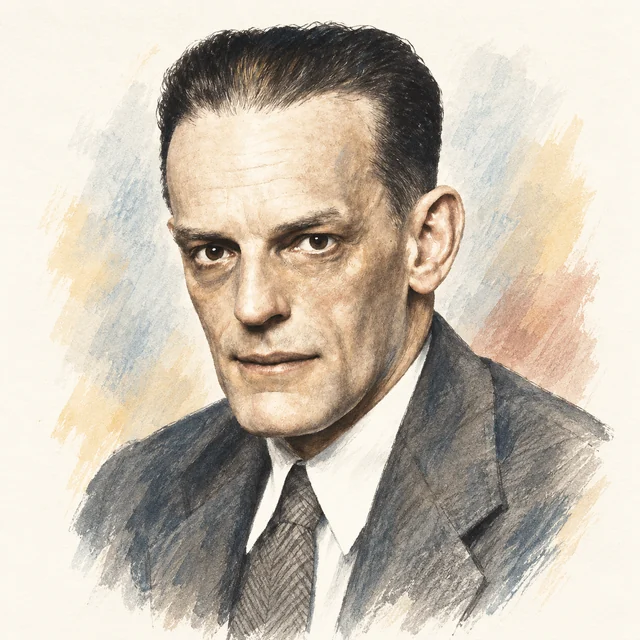
Illustrated portrait of Max Theiler

Max Theiler

Prize share · 1

Theiler advanced yellow-fever research and developed the live attenuated 17D vaccine with colleagues including Hugh H. Smith. He was the sole recipient of the 1951 Medicine Prize.

Read the biography ↗

03 · Years in the making

The path here

  1. 1922

    Theiler obtains London medical qualifications and joins Harvard.

  2. 1930

    Mouse-model work advances study of yellow fever; he joins the Rockefeller Foundation.

  3. 1937

    Theiler and Smith publish their human-immunisation report.

  4. 1951

    Theiler directs foundation laboratories and receives the Medicine Prize.

04 · Read further

From the original sources

Original explanations by Curionode, based on the official records below. Biographical details and affiliations refer to the award year.

  1. Official award summary nobelprize.org
  2. Award ceremony speech nobelprize.org
  3. Rockefeller: vaccine history and Theiler–Smith publications centennial.rucares.org
  4. CDC: yellow-fever transmission cdc.gov
  5. Official biography: Max Theiler nobelprize.org

More in Physiology or Medicine

Browse this subject ↗