A life in context
The person behind the prize
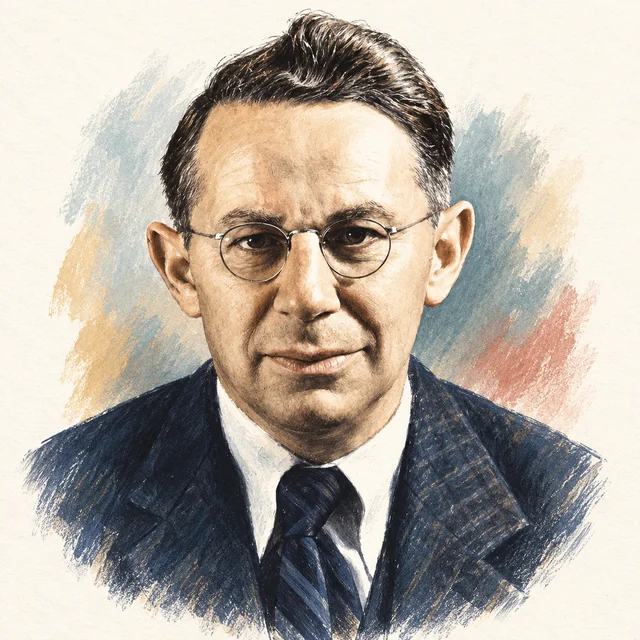
Reichstein grew up in several European cities before his family settled in Zurich. He began chemistry at ETH in 1916, received his diploma in 1920 and completed doctoral work under Hermann Staudinger in 1922. Research on coffee aroma preceded his work on vitamins and hormones. He qualified as a lecturer in 1929 and worked with Leopold Ruzicka from 1931. His independent vitamin C synthesis in 1933 was a separate achievement. In 1938 he moved to Basel as professor of pharmaceutical chemistry and institute director, adding the organic chemistry chair in 1946. His adrenal-cortex research isolated hormones, established steroid structures and helped clarify why similar molecules could have different physiological effects. Basel was his affiliation for his third of the 1950 Medicine Prize. His later work on aldosterone in 1953–1954 was not already part of the 1950 achievement. The award combined chemical and clinical contributions made by several research groups.
The contribution
Reichstein isolated adrenal cortical hormones, clarified their steroid nature and structures, and developed routes to obtaining them. He received one third of the prize.
The idea in plain language
The adrenal cortex is the outer part of an adrenal gland. It produces several hormones with different effects, not one interchangeable substance. Kendall, Reichstein and their research groups separated closely related compounds and investigated their structures. Small chemical differences could accompany substantial differences in biological action.
Read the full award story ↗