A life in context
The person behind the prize
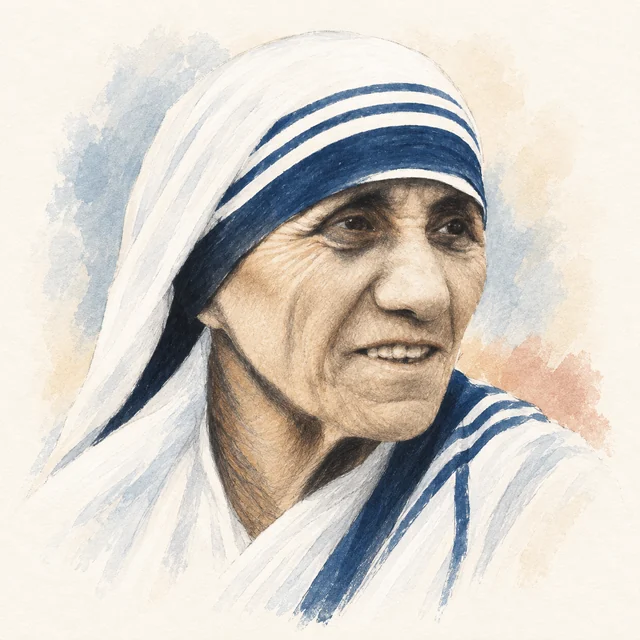
Born Agnes Gonxha Bojaxhiu in an Albanian family, Mother Teresa joined the Sisters of Loreto and travelled through Ireland to India. She taught in Calcutta from 1931 to 1948 before leaving the convent school to work among people facing severe poverty. In 1950 she founded the Missionaries of Charity, whose sisters and helpers established homes and other services for people who lacked support, including the dying. Her Christian faith shaped this work, which expanded beyond India. The 1979 award recognised her humanitarian service as an individual. Her legacy also attracted criticism, including allegations about hospice care and pain relief reported on the Nobel facts page. Canonisation in 2016 was a later religious event.
The contribution
Mother Teresa organised care and assistance for people facing poverty, exclusion and suffering. She received the full Peace Prize personally; the Missionaries of Charity was her organisation. The award does not establish the clinical effectiveness of every service or settle criticism of its practices.
The idea in plain language
In Calcutta, Mother Teresa moved from teaching to work among people who lacked shelter, family support or access to care. The Missionaries of Charity, founded in 1950, built services including homes for children and support for the dying. Her Christian commitment joined a practical effort to meet people where they were, rather than treat poverty as a distant abstraction.
Read the full award story ↗

