c.curionodeThe Nobel Archive

1979 · Peace

Care reaches people left without support

Mother Teresa organised a religious community and wider network of helpers around people facing severe poverty and suffering. The Peace Prize recognised humanitarian service grounded in attention to individual lives.

Humanitarian serviceDignity and careReligious commitment
1979Peace

Visual guide

The prize, pictured

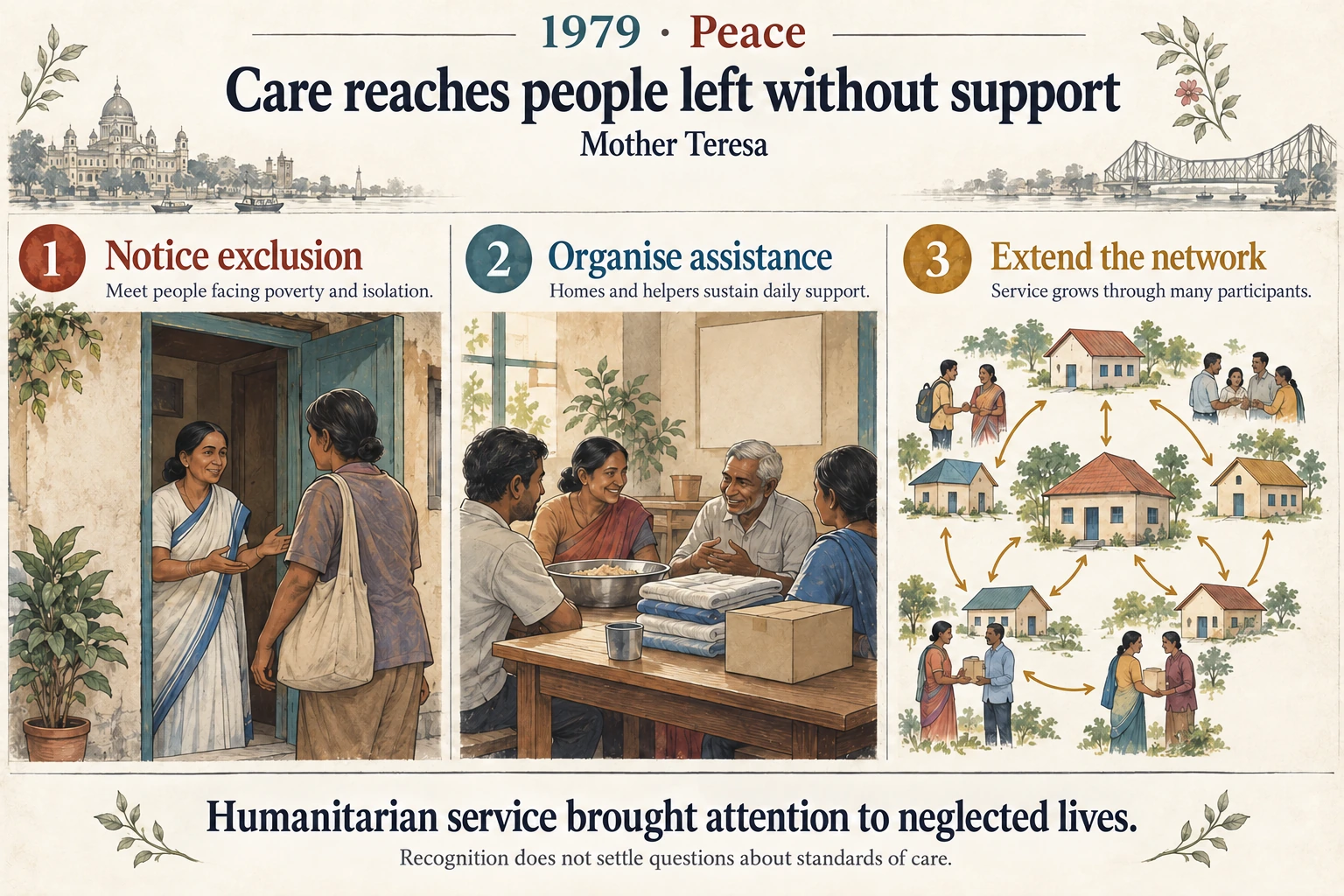
Infographic explaining Care reaches people left without support
Original AI-generated infographic. A conceptual overview; the explanations and sources below provide context.
Read the poster text

Humanitarian service brought attention to neglected lives.

  1. Notice exclusion

    Meet people facing poverty and isolation.

  2. Organise assistance

    Homes and helpers sustain daily support.

  3. Extend the network

    Service grows through many participants.

Recognition does not settle questions about standards of care.

01 · The contribution

The idea, in everyday language

In Calcutta, Mother Teresa moved from teaching to work among people who lacked shelter, family support or access to care. The Missionaries of Charity, founded in 1950, built services including homes for children and support for the dying. Her Christian commitment joined a practical effort to meet people where they were, rather than treat poverty as a distant abstraction.

The work spread through sisters, volunteers and supporters beyond one neighbourhood and beyond India. Sustained service required places, people and resources, as well as a moral commitment. The committee awarded the prize to Mother Teresa personally in 1979, while the organisation and those receiving or helping shape its services remained part of the story.

Why it matters

The award drew international attention to people facing abandonment and to the responsibility of providing care. Mother Teresa received the full prize. Her work inspired supporters and expanded a humanitarian network, while also raising questions about how religious commitments, medical practice and the rights of people receiving help should fit together.
02 · The people

Who brought the idea to life?

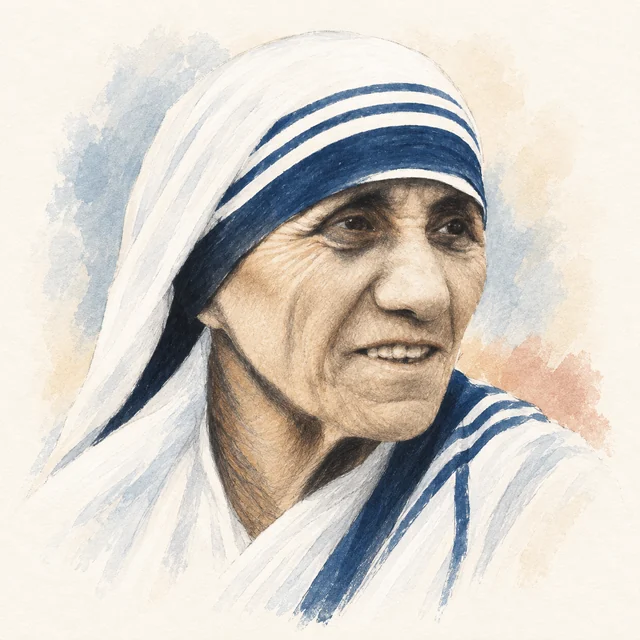
Illustrated portrait of Mother Teresa

Mother Teresa

Prize share · 1/1

Mother Teresa organised care and assistance for people facing poverty, exclusion and suffering. She received the full Peace Prize personally; the Missionaries of Charity was her organisation. The award does not establish the clinical effectiveness of every service or settle criticism of its practices.

Read the biography ↗

03 · Years in the making

The path here

  1. 1931–1948

    Mother Teresa teaches in Calcutta.

  2. 1948

    She begins work outside the convent school.

  3. 1950

    The Missionaries of Charity is established.

  4. 1979

    She receives the full Peace Prize as an individual.

  5. 2003

    Beatification occurs after the award.

  6. 2016

    Canonisation is a later religious event.

04 · Read further

From the original sources

Original explanations by Curionode, based on the official records below. Biographical details and affiliations refer to the award year.

  1. Official announcement nobelprize.org
  2. Official facts nobelprize.org
  3. Official biography nobelprize.org