A life in context
The person behind the prize
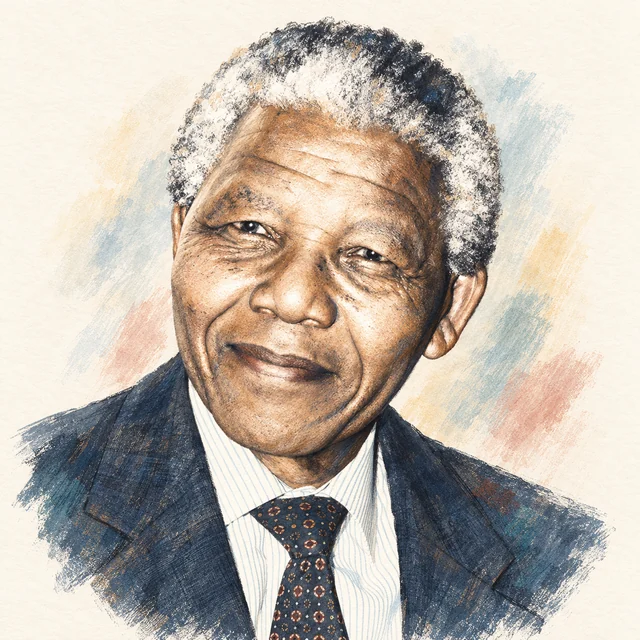
Mandela studied law and joined the ANC in 1944, becoming a leading opponent of apartheid. His struggle included civil disobedience and, after the ANC was banned, participation in organising armed resistance. Arrested in 1962, he received a life sentence at the Rivonia trial in 1964. Released on 11 February 1990 after more than 27 years in prison, he became ANC president and helped lead negotiations. His South African presidency began in 1994, after the prize.
The contribution
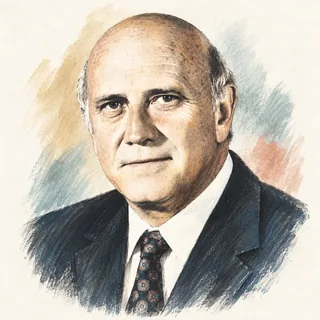
Mandela combined the authority of a liberation leader with a commitment to negotiating a transition to equal voting rights. He and de Klerk shared the prize for efforts to end apartheid peacefully and establish democratic foundations. The recognition came before the 1994 election and did not mean political violence or deep inequality had already disappeared. The transition also depended on many activists, negotiators and communities.
The idea in plain language
Apartheid was a system of enforced racial separation and white minority rule, not simply a disagreement between cultures. Mandela and de Klerk approached its end from profoundly different positions: Mandela led a liberation movement after decades of imprisonment; de Klerk led a government whose institutions had upheld the system. Negotiations sought a political order with equal voting rights.
Read the full award story ↗