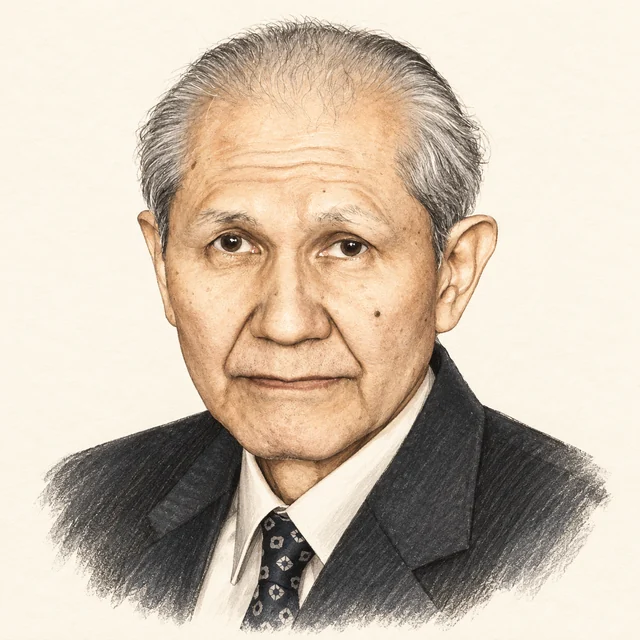
A life in context
The person behind the prize
Shimomura’s education in Japan was disrupted by the Second World War. At Nagoya University he investigated light-producing material from marine organisms and received his doctorate in 1960. He then worked with Frank Johnson at Princeton, collecting large numbers of Aequorea victoria jellyfish at Friday Harbor. Patient extraction and purification revealed more than one component behind the animal’s glow.
The contribution
The team isolated green fluorescent protein, reported in 1962 alongside its studies of aequorin. GFP absorbs excitation energy and emits green light; it is distinct from aequorin, which participates in the jellyfish’s chemical light-producing system. Shimomura’s later chemical work helped identify GFP’s light-emitting group. This basic research supplied the protein that others would develop into a powerful biological marker.
The idea in plain language
Many important events inside a cell are difficult to see. Shimomura isolated a protein from a jellyfish that emits green light after receiving excitation energy. Chalfie and colleagues showed that cells of other organisms could make a working version from its gene. Researchers gained a marker that could be produced inside the system being studied, instead of having to introduce a separate dye into each target.
Read the full award story ↗