A life in context
The person behind the prize
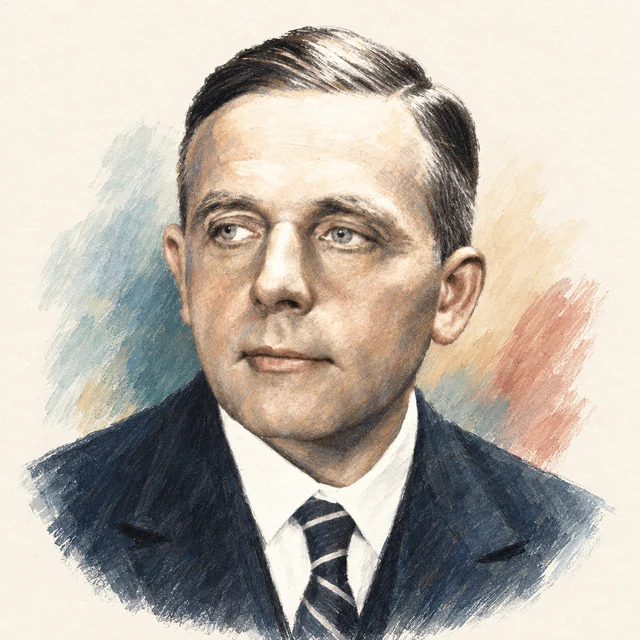
Warburg trained in both chemistry and medicine, completing a chemistry doctorate with Emil Fischer in Berlin in 1906 and a medical degree in Heidelberg in 1911. His research in Berlin-Dahlem applied physical and chemical measurements to living material. Measuring oxygen consumption and studying how carbon monoxide and light affected respiration helped him infer the nature of an iron-containing respiratory catalyst. The 1931 Medicine Prize recognized that work. It did not mean that a complete enzyme complex had been isolated or that every step of cell metabolism was understood. He worked at the Kaiser Wilhelm Institute for Biology in Berlin-Dahlem and later directed a separate Institute for Cell Physiology. He separately investigated tumor metabolism, including fermentation despite available oxygen, now associated with the Warburg effect. Those studies should not be confused with the subject of his Nobel Prize or presented as proof of a universal cancer cause or cure.
The contribution
Warburg received the full Medicine Prize for identifying the nature and mode of action of the respiratory enzyme. Experiments on oxygen consumption, carbon monoxide inhibition and light responses linked cellular respiration with an iron-containing pigment.
The idea in plain language
Cells carry out controlled chemical reactions that use oxygen in extracting usable energy from nutrients. Warburg studied respiration by measuring oxygen consumption in living material. Carbon monoxide could inhibit the process, and suitable light could reverse that inhibition. Comparing the wavelengths that restored respiration with the absorption behavior of pigments supplied evidence about the catalyst involved.
Read the full award story ↗

