A life in context
The person behind the prize
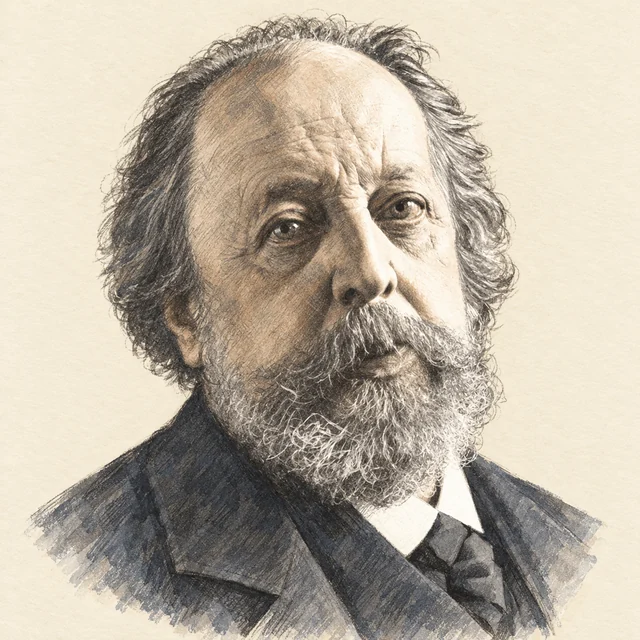
Paul Johann Ludwig Heyse grew up in Berlin in a family connected with scholarship and literary culture. He studied classical and Romance philology in Berlin and Bonn, completed a doctorate on Provençal poetry in 1852 and travelled to Italy on a Prussian scholarship. In 1854, with Emanuel Geibel’s support, King Maximilian II invited him to Munich on a literary stipend. Heyse became a central figure in its literary circles while maintaining close ties with Italian language and literature. His early novella L’Arrabbiata became especially well known, but he also wrote lyric and narrative poetry, plays and novels, and translated Italian authors. From 1871 he helped edit anthologies that brought German and foreign short fiction to readers. His ideas about the novella emphasised concentrated action and a memorable distinguishing feature. His classical ideal of literary form differed from the Naturalist movement, making him a figure in later aesthetic disputes. He also defended artistic independence: he gave up court support alongside Geibel, resigned from the Schiller Prize jury after interference in an award and faced censorship of Maria von Magdala. In 1910 he was ennobled and received the full Literature Prize for his broad literary achievement. Illness prevented his attendance; the German minister represented him. He died in Munich in 1914.
The contribution
Heyse received the full Literature Prize for a long career spanning poetry, drama, novels and short stories. The concentrated form and psychological interest of his novellas were especially important within that wider achievement.
The idea in plain language
A short narrative cannot include every event in a life. Heyse’s thinking about the novella emphasised concentrated action and a distinctive feature that gives an individual story its shape. Choices, relationships and conflicts can be made vivid through selection rather than through an exhaustive account. His Italian interests supplied settings, literary connections and translation work, alongside writing rooted in German culture.
Read the full award story ↗

