A life in context
The person behind the prize
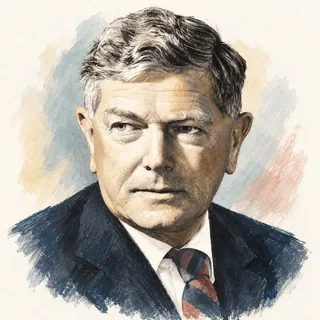
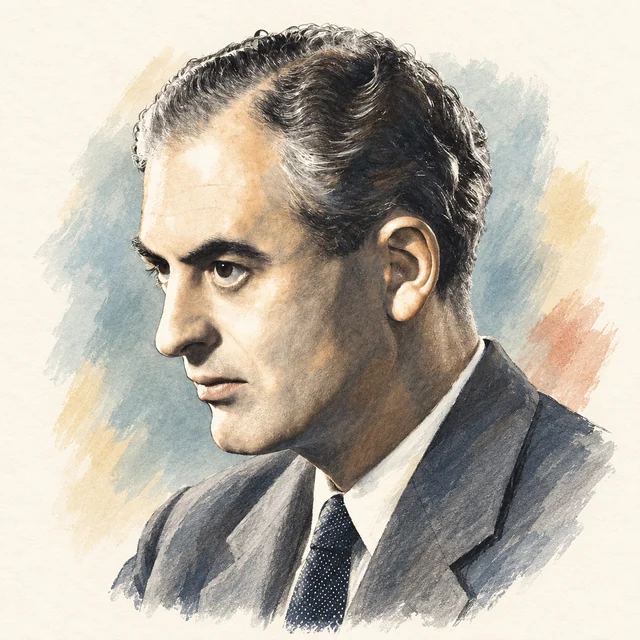
Medawar entered Oxford’s Magdalen College in 1932 to study zoology, later working in pathology and on tissue culture, regeneration and growth. Wartime investigations of skin grafts helped establish that rejection involves an immune response, including faster rejection after repeat exposure. He became professor at Birmingham in 1947 and moved to University College London in 1951. Work with Rupert Billingham on cattle twins, interpreted alongside Owen’s observations and Burnet and Fenner’s theory, led to experiments with Billingham and Leslie Brent. Their 1953 report and fuller 1956 studies showed that exposure during early development could produce later acceptance of donor-related grafts while responses to unrelated material remained. UCL was his 1960 affiliation. He received half of the prize. Directing the National Institute for Medical Research from 1962 and his later books belong to subsequent history.
The contribution
Medawar, Billingham and Brent experimentally established acquired, donor-specific transplantation tolerance. Medawar received half of the Medicine Prize.
The idea in plain language
Why does tissue from another individual often fail to survive as a graft? Medawar’s earlier work identified rejection as an immune response, but the acceptance of grafts between cattle twins suggested that inherited similarity was not the whole explanation.
Read the full award story ↗