A life in context
The person behind the prize
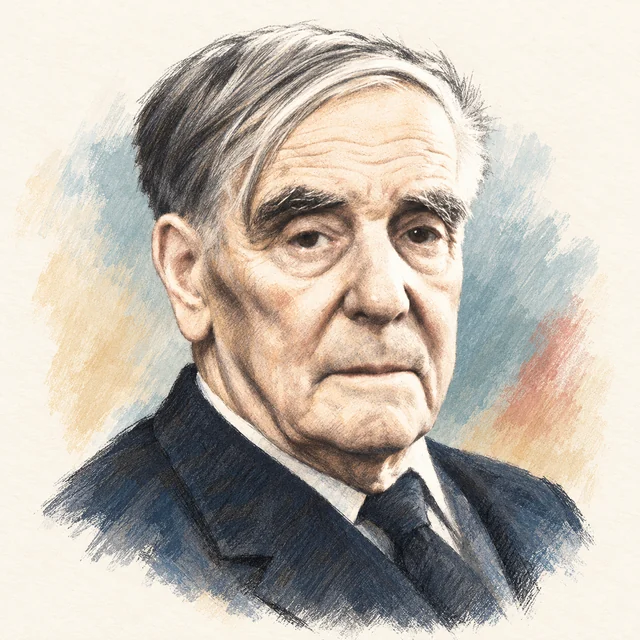
Kapitsa began research with Abram Ioffe in Petrograd and completed his studies in 1918. In 1921 he went to Cambridge to work with Ernest Rutherford. Strong magnetic fields and the behaviour of metals led him toward the difficult problem of reaching very low temperatures. A new helium-liquefaction apparatus followed in 1934. Back in Moscow, he organised the Institute for Physical Problems and investigated liquid helium. Experiments in the late 1930s revealed extraordinary flow properties; his 1938 paper described the very low viscosity associated with superfluidity. John Allen and Don Misener published independent work alongside it. Kapitsa later developed industrial gas-liquefaction methods and studied high-power microwaves and plasmas. The Nobel recognition concerned his low-temperature inventions and discoveries.
The contribution
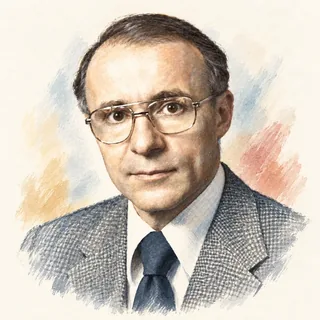
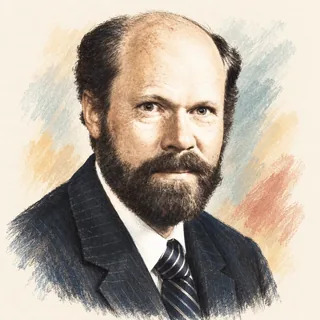
Kapitsa received one half of the Physics Prize for low-temperature inventions and discoveries, including helium-liquefaction techniques and superfluidity research. Penzias and Wilson shared the other half for a separate discovery in astronomy; this was not one joint experiment.
The idea in plain language
Producing liquid helium made extreme cold available for experiments. Kapitsa developed new apparatus and investigated helium’s unusual flow. The superfluid behaviour reported in the late 1930s showed that a liquid could exhibit collective quantum properties on a scale visible in the laboratory. This was a new state of behaviour, not simply ordinary fluid becoming thicker as it cooled.
Read the full award story ↗