A life in context
The person behind the prize
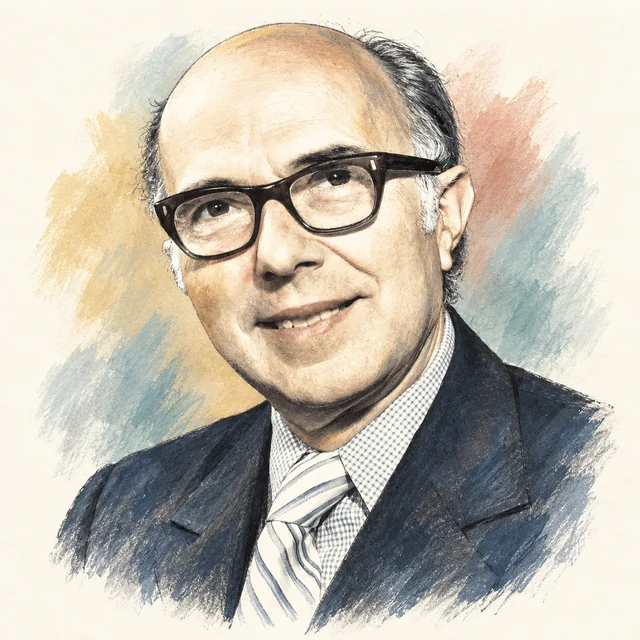
Dulbecco studied medicine in Turin, where Giuseppe Levi’s laboratory introduced him to histology and cell culture and brought him into contact with Salvador Luria and Rita Levi-Montalcini. He qualified in 1936, served as a physician during the war and joined the Italian resistance. In 1947 he moved to work with Luria in Indiana, then to Caltech in 1949. A method for counting animal-virus plaques in cell cultures made quantitative virology possible; Marguerite Vogt was an important collaborator. Work with tumour viruses, including polyoma virus and SV40, investigated how viral genetic material interacts with host cells. He moved to the Salk Institute in 1962 and to London’s Imperial Cancer Research Fund in 1972. Later work on naturally occurring cancer and genome research followed the prize.
The contribution
Dulbecco’s research showed how DNA tumour viruses can leave genetic material in transformed cells. He received one third of the Medicine Prize, with Baltimore and Temin recognised for reverse transcription in RNA viruses.
The idea in plain language
Dulbecco and collaborators used cell cultures to study animal viruses quantitatively and investigated DNA tumour viruses such as polyoma virus and SV40. Work on transformed cells showed that viral genetic material could remain associated with the host-cell genome. This helped explain how a temporary infection could have lasting effects on cell behaviour. The finding concerned particular experimental virus–cell systems, not a claim that every cancer has a viral cause.
Read the full award story ↗