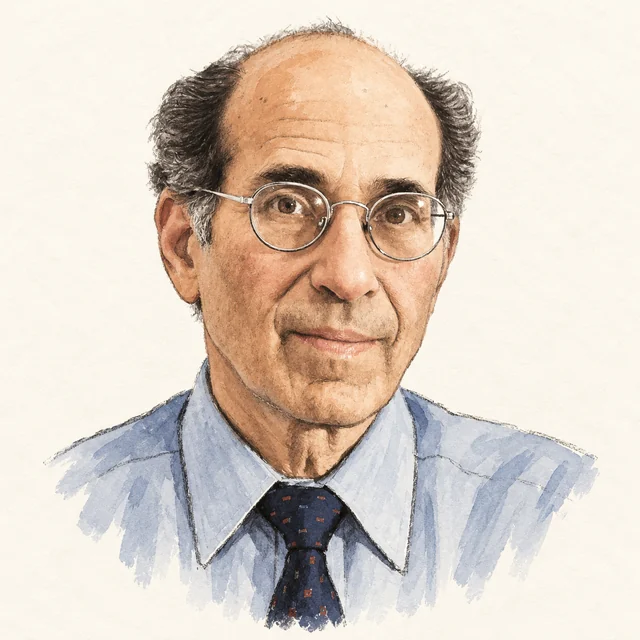
A life in context
The person behind the prize
Axel trained as a physician and developed a research career in molecular biology at Columbia University. He became interested in applying gene-based methods to the nervous system, asking how information from the outside world is represented in the brain. Smell offered a particularly demanding problem because animals can distinguish a huge variety of chemical compounds.
The contribution
With Linda Buck, then working in his laboratory, Axel identified a large family of odorant-receptor genes in 1991. The finding supplied molecular tools for tracing sensory neurons. Subsequent work by his group helped show how neurons expressing the same receptor converge on particular structures in the olfactory bulb. Smell is therefore organised through both receptor recognition and neural wiring, not through a separate dedicated receptor for every familiar scent.
The idea in plain language
A scent begins with molecules reaching sensory neurons high in the nasal cavity. Receptor proteins on those neurons respond to particular chemical features and trigger electrical signals. In 1991 Buck and Axel identified a large family of genes encoding odorant receptors. This gave researchers molecular handles for asking how many different chemicals could be recognised and how the signals were organised.
Read the full award story ↗