c.curionodeThe Nobel Archive

2004 · Physiology or Medicine

How a pattern becomes a smell

Many receptor types and organised nerve connections turn chemical signals into odour information.

smellodorant receptorscombinatorial codeneural circuits
2004Physiology or Medicine

Visual guide

The prize, pictured

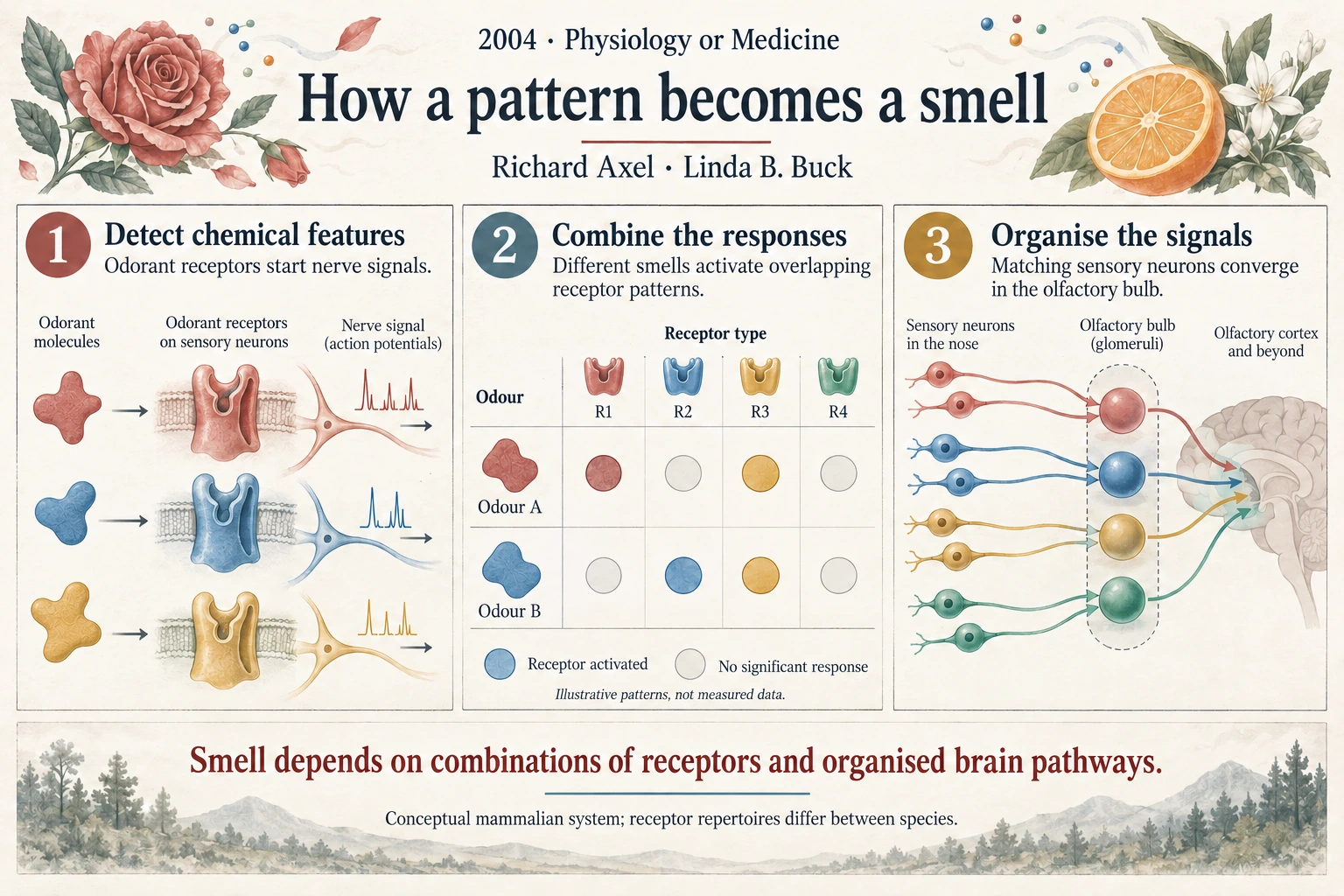
Infographic explaining How a pattern becomes a smell
Original AI-generated infographic. A conceptual overview; the explanations and sources below provide context.
Read the poster text

Smell depends on combinations of receptors and organised brain pathways.

  1. Detect chemical features

    Odorant receptors start nerve signals.

  2. Combine the responses

    Different smells activate overlapping receptor patterns.

  3. Organise the signals

    Matching sensory neurons converge in the olfactory bulb.

Conceptual mammalian system; receptor repertoires differ between species.

01 · The discovery

The idea, in everyday language

A scent begins with molecules reaching sensory neurons high in the nasal cavity. Receptor proteins on those neurons respond to particular chemical features and trigger electrical signals. In 1991 Buck and Axel identified a large family of genes encoding odorant receptors. This gave researchers molecular handles for asking how many different chemicals could be recognised and how the signals were organised.

The code is combinatorial: one odorant can activate several receptor types, while a receptor can respond to several odorants. A sensory neuron generally expresses one predominant receptor type. Neurons carrying the same receptor send their axons toward particular glomeruli in the olfactory bulb. Signals then reach further brain regions, where patterns are processed in ways that contribute to recognition, learning and memory.

Why it matters

The discovery opened a molecular route into a sensory system that had been difficult to explain. Researchers could connect genes, receptors, individual neurons and organised brain pathways. Work by the laureates and their groups helped show how a large chemical world can be represented with a more limited set of receptor types, establishing a foundation for further studies of sensory perception.

02 · The people

Who brought the idea to life?

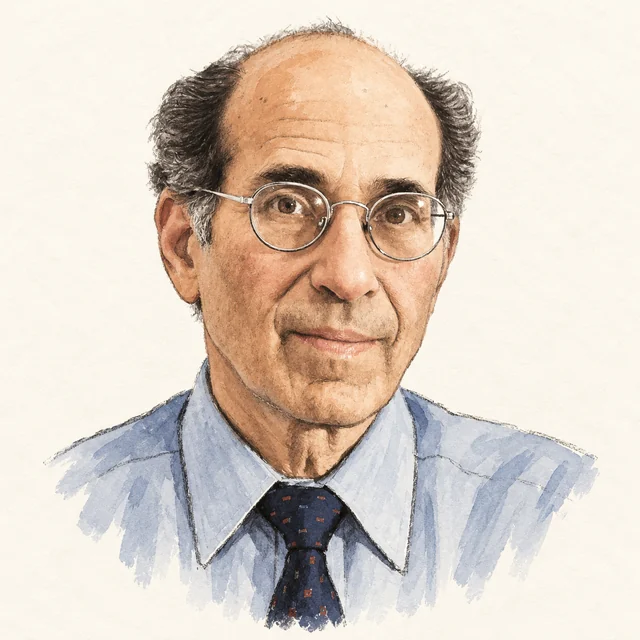
Illustrated portrait of Richard Axel

Richard Axel

Prize share · 1/2

With Linda Buck, then working in his laboratory, Axel identified a large family of odorant-receptor genes in 1991. The finding supplied molecular tools for tracing sensory neurons. Subsequent work by his group helped show how neurons expressing the same receptor converge on particular structures in the olfactory bulb. Smell is therefore organised through both receptor recognition and neural wiring, not through a separate dedicated receptor for every familiar scent.

Read the biography ↗
Illustrated portrait of Linda B. Buck

Linda B. Buck

Prize share · 1/2

Buck devised a strategy for finding the genes encoding odorant receptors, leading to the 1991 paper with Axel. Her independent laboratory then investigated which odorants activate particular receptors and how their signals are represented in the brain. One odorant can activate several receptor types, and one receptor can respond to several odorants: the pattern across the system carries information about smell.

Read the biography ↗

03 · Years in the making

The path here

  1. 1991

    Buck and Axel identified the large odorant-receptor gene family.

  2. 1990s

    Their independent groups mapped receptor expression and organised pathways into the olfactory bulb.

  3. 2004

    The prize recognised odorant receptors and the organisation of the olfactory system.

04 · Read further

From the original sources

Original explanations by Curionode, based on the official records below. Biographical details and affiliations refer to the award year.

  1. Official announcement nobelprize.org

More in Physiology or Medicine

Browse this subject ↗