A life in context
The person behind the prize
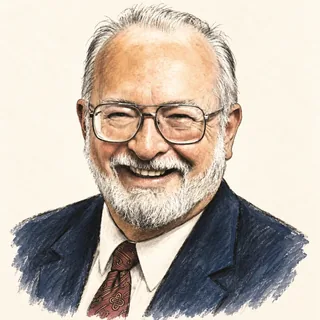
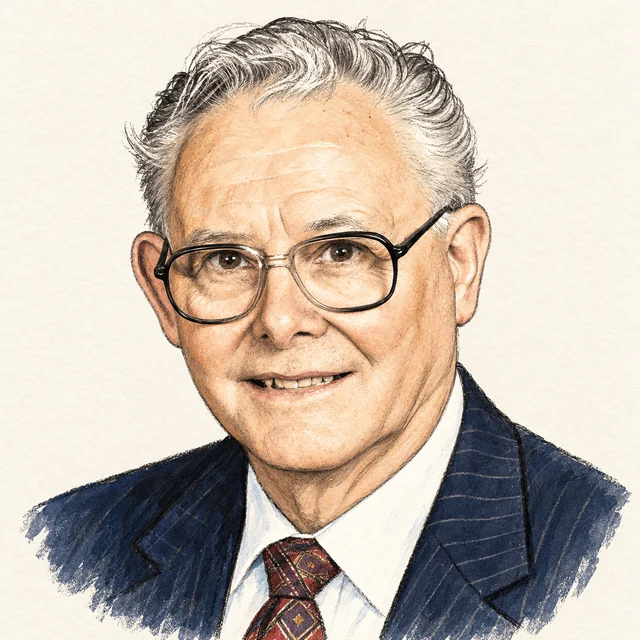
Mansfield’s path into physics included work in a printing firm, military service and further study before university research. He developed expertise in nuclear magnetic resonance and spent time at the University of Illinois before joining Nottingham in 1964. His research moved from the behaviour of spins in solids toward methods that could turn spatially encoded signals into useful images.
The contribution
Mansfield developed ways to analyse signals produced with magnetic-field gradients and connect those measurements with image structure. He also proposed extremely rapid acquisition using changing gradients, an approach known as echo-planar imaging. Together with later engineering advances, these ideas helped make magnetic-resonance imaging practical. Faster imaging can reduce motion problems and enable new measurements, although speed, resolution and signal quality involve trade-offs.
The idea in plain language
Many atomic nuclei have magnetic properties. In ordinary clinical MRI, signals mainly come from hydrogen nuclei in water and fat. A strong magnetic field creates a small net magnetisation, and carefully timed radiofrequency pulses disturb it. The evolving signal depends on the tissue and the measurement sequence. By itself, a combined signal does not tell us exactly where each contribution originated.
Read the full award story ↗