A life in context
The person behind the prize
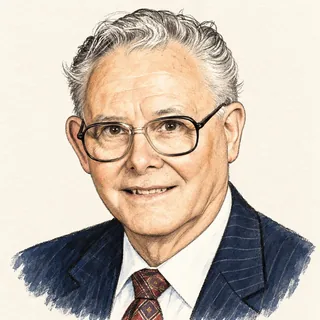
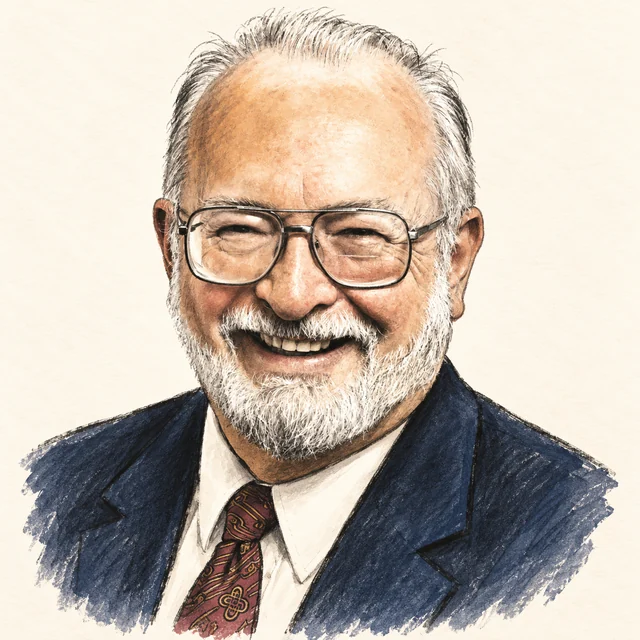
Lauterbur was a chemist with extensive experience in nuclear magnetic resonance, a method for studying matter through the magnetic behaviour of atomic nuclei. His imaging breakthrough came while he was at the State University of New York at Stony Brook. Rather than treating variations in a magnetic field only as an experimental imperfection, he realised that deliberately introduced variations could supply useful information about location.
The contribution
Lauterbur showed that magnetic-field gradients make resonance signals depend on position. Combining measurements taken with different gradient directions allowed him to reconstruct a two-dimensional image. His 1973 demonstration distinguished water-filled structures through their signals. This added spatial information to magnetic resonance and laid a foundation for MRI; he did not discover the underlying resonance phenomenon itself.
The idea in plain language
Many atomic nuclei have magnetic properties. In ordinary clinical MRI, signals mainly come from hydrogen nuclei in water and fat. A strong magnetic field creates a small net magnetisation, and carefully timed radiofrequency pulses disturb it. The evolving signal depends on the tissue and the measurement sequence. By itself, a combined signal does not tell us exactly where each contribution originated.
Read the full award story ↗