A life in context
The person behind the prize
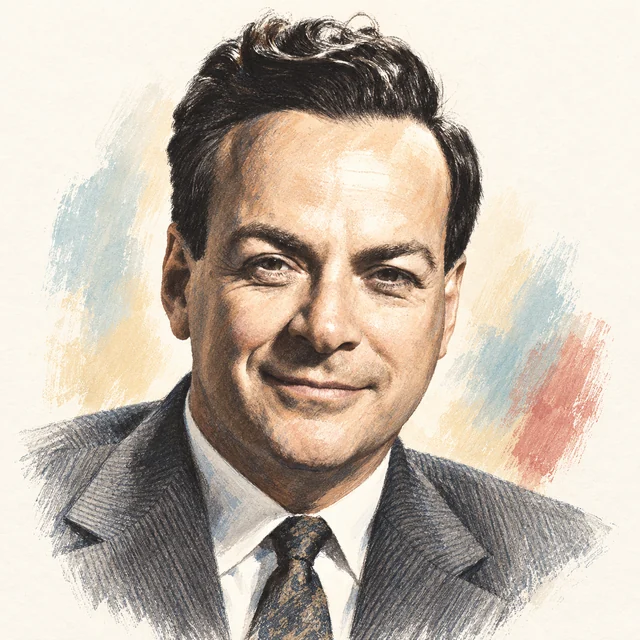
Feynman received his MIT bachelor’s degree in 1939 and Princeton doctorate in 1942. He taught theoretical physics at Cornell from 1945 to 1950, then moved to Caltech, his 1965 affiliation. His approach to quantum electrodynamics emphasised a view of entire processes in space and time. Diagrams provided a systematic way to organise terms in calculations of interactions, rather than literal photographs of particle paths. The influential Space-Time Approach to Quantum Electrodynamics paper appeared in September 1949, following work developed in the late 1940s. The methods clarified how measurable effects could be calculated, with results agreeing with other formulations. He later became Richard Chace Tolman Professor at Caltech. The prize recognised fundamental QED work and its wider consequences, rather than every aspect of his teaching or research.
The contribution
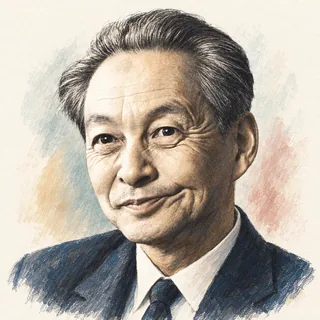
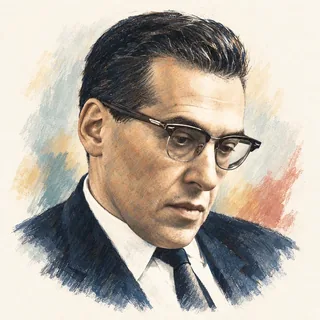
Feynman developed a practical space-time and diagrammatic approach to quantum electrodynamics. He received one third of the Physics Prize.
The idea in plain language
Quantum electrodynamics combined quantum theory with relativity, but early calculations of corrections to electron properties produced troublesome infinities. Experiments such as the Lamb shift and measurements of the electron’s magnetic moment demanded a workable theory.
Read the full award story ↗