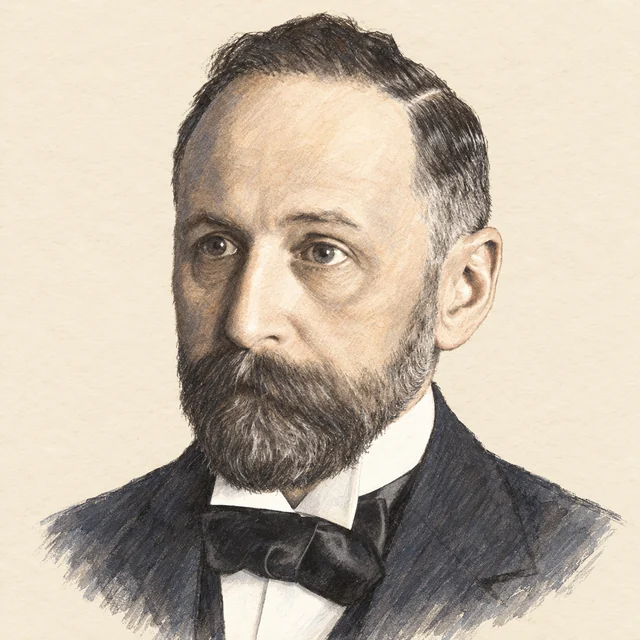
A life in context
The person behind the prize
Richard Willstätter was born in Karlsruhe and trained in chemistry in Munich, where he completed a doctorate under Alfred Einhorn. His early organic chemistry included work on the structures of plant alkaloids. He became a professor in Zurich in 1905 and later directed chemical research at the Kaiser Wilhelm Institute in Berlin. Plant pigments became a major focus. With coworkers, he developed careful methods of separation and chemical comparison that made chlorophyll accessible as a subject of organic chemistry. The work distinguished chlorophyll a and b in the green leaves studied and established the importance of magnesium in the pigment. He also investigated other families of plant pigments, including carotenoids and anthocyanins. The 1915 Chemistry Prize recognised plant-pigment research, especially chlorophyll; it did not mean that he had solved the complete mechanism of photosynthesis. The official award record names Berlin institutions. His subsequent Munich career and later enzyme research belong to the wider biography. In 1925 he resigned his Munich professorship in protest against antisemitism, according to the university’s historical account. He faced further persecution under National Socialism and was forced to leave Germany for Switzerland in 1939. The LMU chronology is used here for the resignation and emigration; the older Nobel biography gives differing dates. He died in Switzerland in 1942.
The contribution
Willstätter received the full Chemistry Prize for research on plant pigments, especially chlorophyll. Separation, purification and chemical comparison distinguished related pigments and established important features of their composition.
The idea in plain language
A green leaf is not a sample of one pure green substance. Studying its pigments required methods that separated related compounds and allowed their chemical properties to be compared. Willstätter and coworkers distinguished chlorophyll a and b in the green leaves they studied. They also established that magnesium was an essential part of chlorophyll, rather than merely an accidental impurity in a preparation.
Read the full award story ↗

