c.curionodeThe Nobel Archive

1915 · Chemistry

Separate plant colours to study their chemistry

Leaves contain related substances whose colours can conceal their chemical differences. Willstätter’s research separated and compared plant pigments, especially chlorophyll.

Plant pigmentsChlorophyllOrganic chemistry
1915Chemistry

Visual guide

The prize, pictured

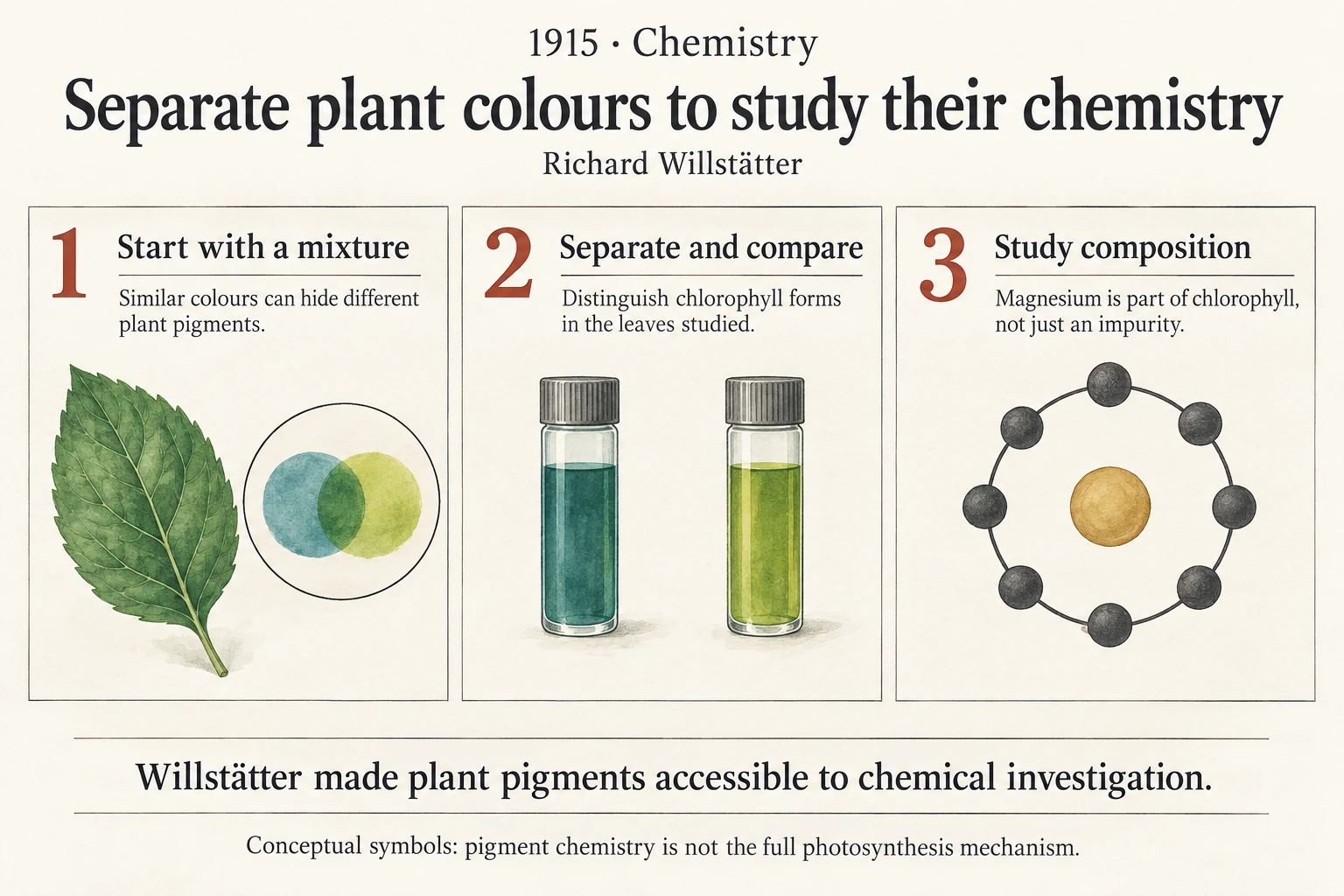
Infographic explaining Separate plant colours to study their chemistry
Original AI-generated infographic. A conceptual overview; the explanations and sources below provide context.
Read the poster text

Willstätter made plant pigments accessible to chemical investigation.

  1. Start with a mixture

    Similar colours can hide different plant pigments.

  2. Separate and compare

    Distinguish chlorophyll forms in the leaves studied.

  3. Study composition

    Magnesium is part of chlorophyll, not just an impurity.

Conceptual symbols: pigment chemistry is not the full photosynthesis mechanism.

01 · The discovery

The idea, in everyday language

A green leaf is not a sample of one pure green substance. Studying its pigments required methods that separated related compounds and allowed their chemical properties to be compared. Willstätter and coworkers distinguished chlorophyll a and b in the green leaves they studied. They also established that magnesium was an essential part of chlorophyll, rather than merely an accidental impurity in a preparation.

These results made the pigments involved in photosynthesis more accessible to chemical investigation. Willstätter also worked on carotenoids and anthocyanins, other families responsible for plant colours. The 1915 prize recognised this plant-pigment research, especially chlorophyll. It did not award a complete account of how a plant converts light into chemical energy, nor the full modern structural explanation of every pigment.

Why it matters

Careful work on pigments helped connect visible plant colours to identifiable chemical substances. It provided foundations for later research on chlorophyll and photosynthesis while distinguishing the chemical components from the larger processes in which they participate.
02 · The people

Who brought the idea to life?

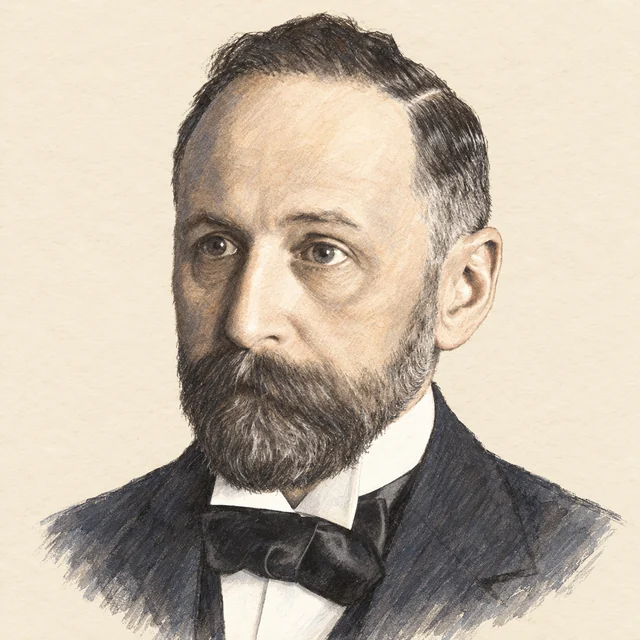
Illustrated portrait of Richard Willstätter

Richard Willstätter

Prize share · 1

Willstätter received the full Chemistry Prize for research on plant pigments, especially chlorophyll. Separation, purification and chemical comparison distinguished related pigments and established important features of their composition.

Read the biography ↗

03 · Years in the making

The path here

  1. 1872

    Willstätter is born in Karlsruhe.

  2. 1905

    He takes a professorship in Zurich.

  3. 1915

    He receives the full Chemistry Prize for plant pigments, especially chlorophyll.

  4. 1925

    He resigns his Munich professorship in protest against antisemitism.

  5. 1939

    Persecution forces his departure for Switzerland.

04 · Read further

From the original sources

Original explanations by Curionode, based on the official records below. Biographical details and affiliations refer to the award year.

  1. Official award summary nobelprize.org
  2. Historical presentation account nobelprize.org
  3. LMU: Willstätter’s resignation and persecution lmu.de

More in Chemistry

Browse this subject ↗