c.curionodeThe Nobel Archive

1914 · Chemistry

Find the hidden errors in atomic-weight measurements

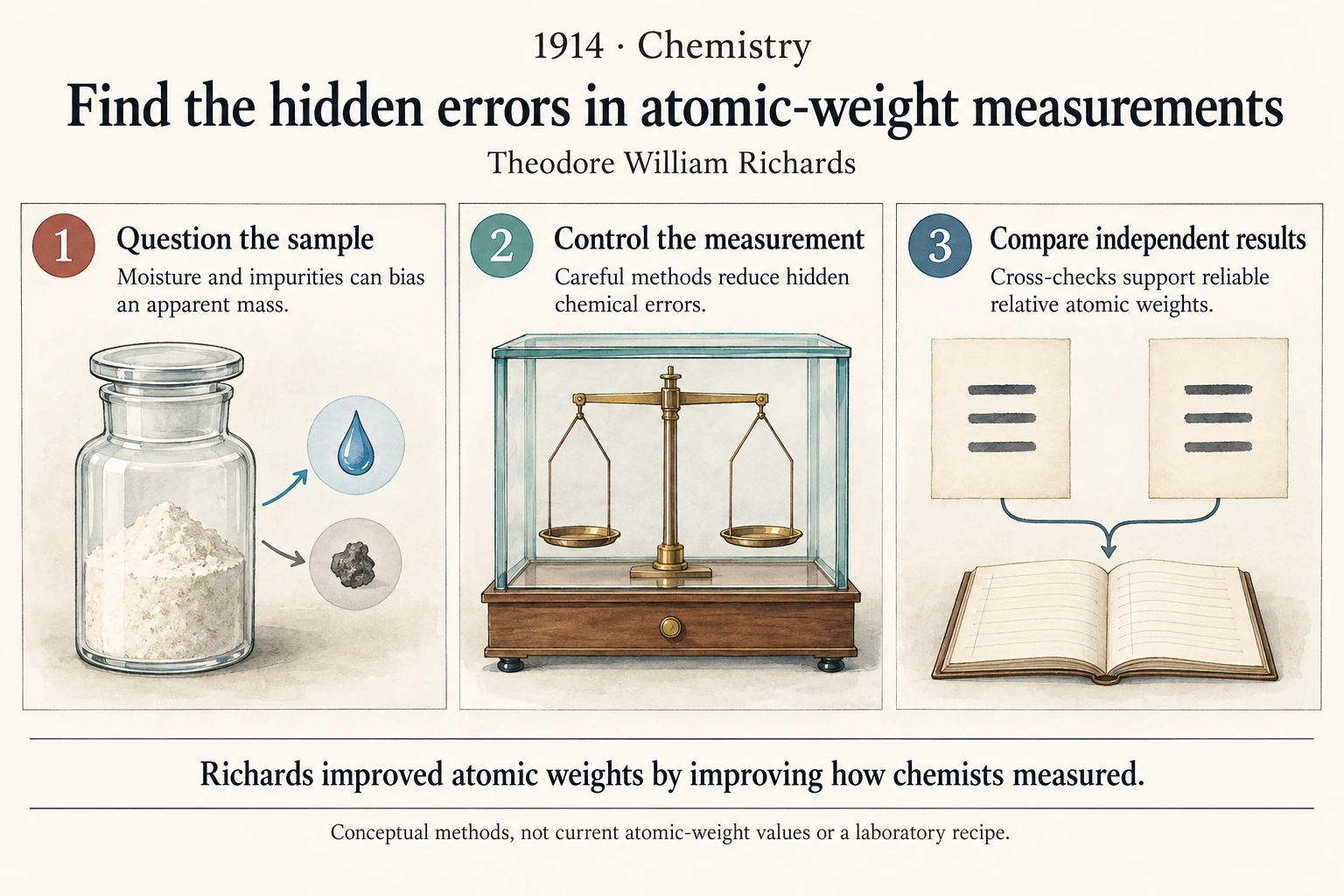
Richards improved the determination of relative atomic weights by controlling the chemistry behind a measurement. A very precise balance could still give a biased result if a sample contained moisture or impurities.

Atomic weightsSystematic errorChemical measurement
1914Chemistry

Visual guide

The prize, pictured

Infographic explaining Find the hidden errors in atomic-weight measurements
Original AI-generated infographic. A conceptual overview; the explanations and sources below provide context.
Read the poster text

Richards improved atomic weights by improving how chemists measured.

  1. Question the sample

    Moisture and impurities can bias an apparent mass.

  2. Control the measurement

    Careful methods reduce hidden chemical errors.

  3. Compare independent results

    Cross-checks support reliable relative atomic weights.

Conceptual methods, not current atomic-weight values or a laboratory recipe.

01 · The discovery

The idea, in everyday language

Chemists could infer relative atomic weights from the masses of substances entering or emerging from reactions with known composition. The difficulty was that a measured mass might include something unintended: retained water, trapped gases, contamination or material that had not been fully separated. Repeating the same biased procedure could yield impressively consistent values without making them correct.

Richards and his research school improved purification, weighing conditions, detection of small residual quantities and independent checks. They revised values for many elements and identified causes of earlier errors. The 1914 prize recognised accurate determinations as well as the methodological work that sustained them. It was reserved and announced on 11 November 1915.

Why it matters

Reliable relative atomic weights support quantitative chemistry: they help connect the masses of substances to their chemical proportions. Richards’s work showed why chemical control and independent checks are central to precision measurement, beyond simply reporting more decimal places.
02 · The people

Who brought the idea to life?

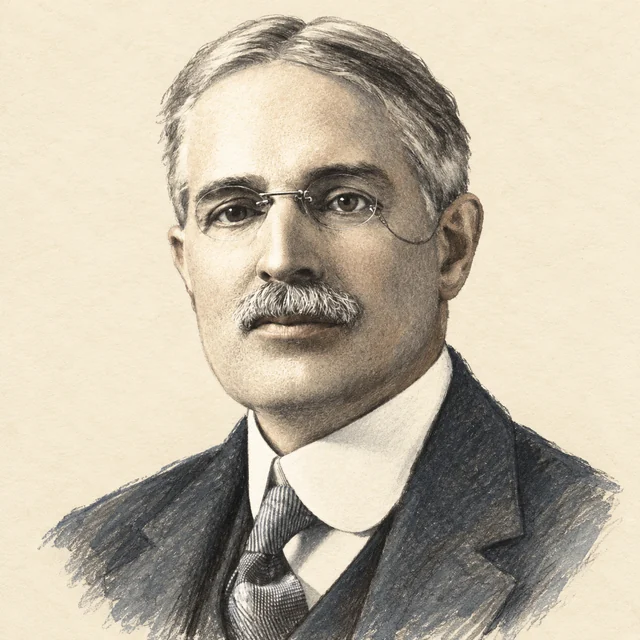
Illustrated portrait of Theodore William Richards

Theodore William Richards

Prize share · 1

Richards received the full Chemistry Prize for accurate determinations of the atomic weights of many elements. He and his school improved the chemical methods and control of systematic errors that made those determinations reliable.

Read the biography ↗

03 · Years in the making

The path here

  1. 1868

    Richards is born in Germantown, Pennsylvania.

  2. 1888

    He earns his doctorate at Harvard.

  3. 1904

    He challenges several accepted atomic-weight values.

  4. 1912

    He becomes Erving Professor and directs the Wolcott Gibbs Memorial Laboratory.

  5. 1914

    The Chemistry Prize is reserved.

  6. 1915

    The 1914 award is announced on 11 November.

04 · Read further

From the original sources

Original explanations by Curionode, based on the official records below. Biographical details and affiliations refer to the award year.

  1. Official award summary nobelprize.org
  2. Historical presentation account nobelprize.org
  3. Harvard Chemistry: Richards in the departmental history chemistry.harvard.edu
  4. IUPAC Gold Book: relative atomic mass goldbook.iupac.org

More in Chemistry

Browse this subject ↗