A life in context
The person behind the prize
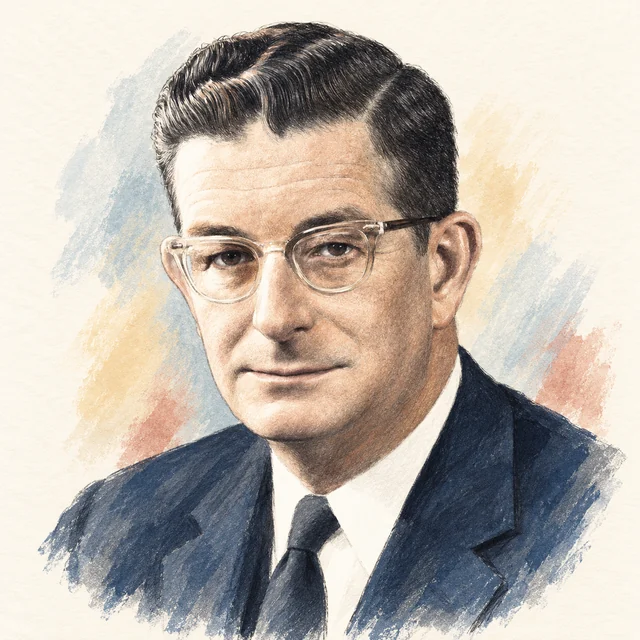
Woodward was attracted to chemistry as a child. He entered MIT in 1933, returned after an interruption and earned his bachelor’s degree in 1936 and doctorate in 1937. He then joined Harvard, progressing through research and teaching appointments to professor in 1950 and Donner Professor in 1960. His teams tackled complex natural products through careful structural reasoning, stereochemistry and experimental planning. Work with William von Eggers Doering on quinine in 1944 was a formal synthesis, reaching an intermediate linked to a previously reported route. Other achievements included difficult syntheses of steroids, strychnine, reserpine and chlorophyll, as well as structure determination. He directed the Basel Woodward Research Institute from 1963 while retaining Harvard affiliation. The prize honoured the art of organic synthesis and the expanded possibilities his collaborative work demonstrated.
The contribution
Woodward achieved influential syntheses of complex organic compounds. He received the full Chemistry Prize.
The idea in plain language
Knowing a natural product’s properties or structure does not automatically provide a route to make it. A complex molecule poses problems of connectivity, three-dimensional arrangement and the order in which transformations can be carried out.
Read the full award story ↗

