c.curionodeThe Nobel Archive

1965 · Chemistry

Planning the synthesis of complex molecules

Woodward’s organic syntheses showed how structural reasoning and carefully planned transformations could reach demanding natural products.

Organic synthesisStructural reasoningCollaborative chemistry
1965Chemistry

Visual guide

The prize, pictured

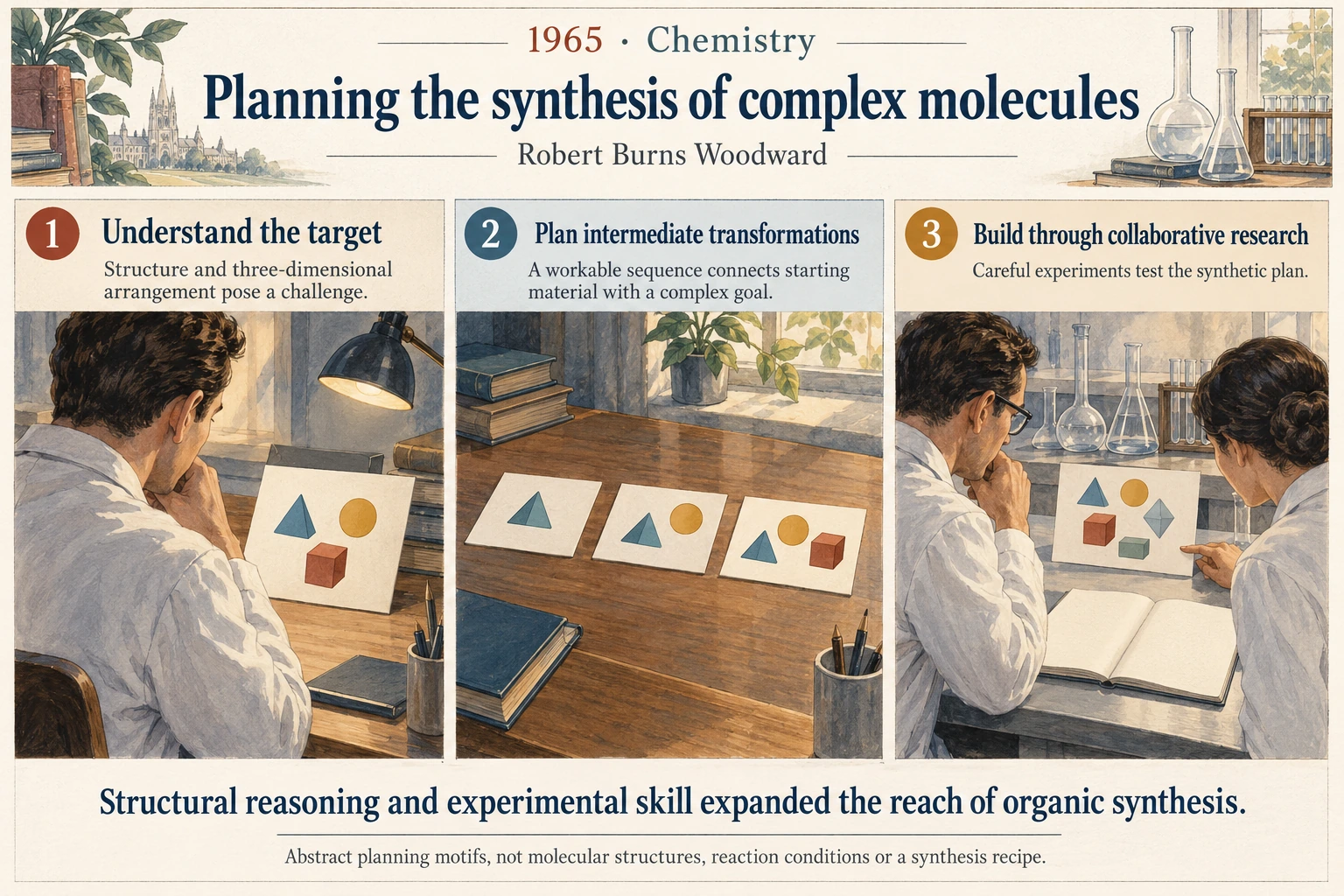
Infographic explaining Planning the synthesis of complex molecules
Original AI-generated infographic. A conceptual overview; the explanations and sources below provide context.
Read the poster text

Structural reasoning and experimental skill expanded the reach of organic synthesis.

  1. Understand the target

    Structure and three-dimensional arrangement pose a challenge.

  2. Plan intermediate transformations

    A workable sequence connects starting material with a complex goal.

  3. Build through collaborative research

    Careful experiments test the synthetic plan.

Abstract planning motifs, not molecular structures, reaction conditions or a synthesis recipe.

01 · The discovery

The idea, in everyday language

Knowing a natural product’s properties or structure does not automatically provide a route to make it. A complex molecule poses problems of connectivity, three-dimensional arrangement and the order in which transformations can be carried out.

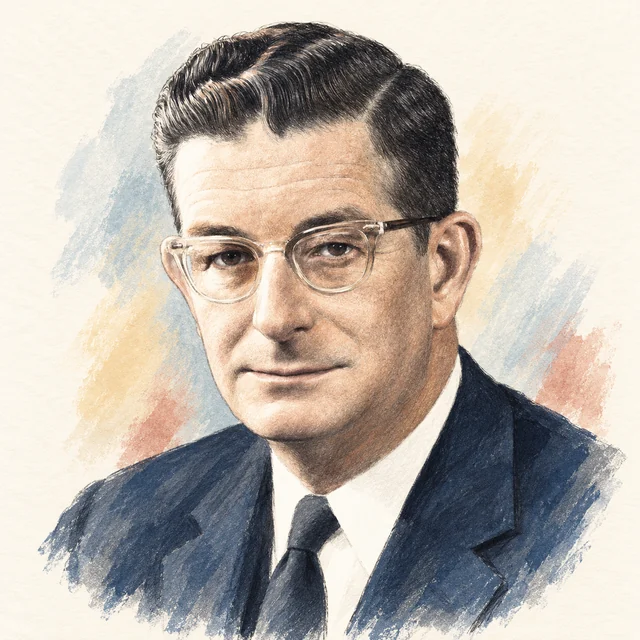
Woodward and his teams combined structural analysis, chemical insight and demanding experimental work. Their achievements included syntheses involving steroids, strychnine, reserpine and chlorophyll. The 1944 quinine work with William von Eggers Doering was a formal synthesis: they reached an intermediate connected to an earlier reported route to quinine.

Why it matters

The achievements expanded what organic chemists could attempt and made synthesis an arena for testing structural ideas. Woodward received the full prize, while the research depended on collaborators and earlier chemistry. Synthesising chlorophyll did not itself reproduce a living plant or its entire photosynthetic system.
02 · The people

Who brought the idea to life?

03 · Years in the making

The path here

  1. 1936

    Woodward earns his MIT bachelor’s degree.

  2. 1937

    He completes his doctorate and joins Harvard.

  3. 1944

    Woodward and Doering report their formal quinine synthesis.

  4. 1950

    Woodward becomes professor at Harvard.

  5. 1960

    He becomes Donner Professor at Harvard.

  6. 1965

    He receives the Chemistry Prize.

04 · Read further

From the original sources

Original explanations by Curionode, based on the official records below. Biographical details and affiliations refer to the award year.

  1. Official award summary nobelprize.org
  2. Award ceremony speech nobelprize.org
  3. Woodward–Doering original publication metadata (1944) pubs.acs.org
  4. Quinine formal-synthesis historical analysis pmc.ncbi.nlm.nih.gov
  5. Official biography: Robert Burns Woodward nobelprize.org

More in Chemistry

Browse this subject ↗