A life in context
The person behind the prize
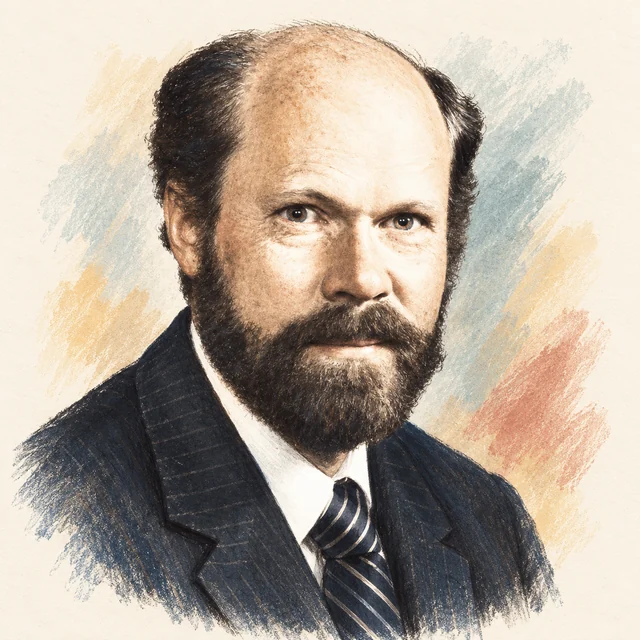
Wilson grew up in Houston, learning practical electronics from his father and repairing radios and televisions. He graduated in physics from Rice in 1957 and completed a Caltech doctorate in 1962. Work at the Owens Valley Radio Observatory combined instrument building with astronomical surveys, guided by John Bolton and later Maarten Schmidt. He joined Bell Laboratories in 1963, where Arno Penzias was the other radio astronomer. Their careful measurements with the Holmdel horn antenna uncovered the cosmic microwave background. When research support was reduced, both combined astronomy with applied communications work. Later collaboration with Penzias, Keith Jefferts and other colleagues used millimetre wavelengths to investigate molecules in interstellar clouds. Wilson also directed construction of a new millimetre-wave antenna at Crawford Hill.
The contribution
Wilson shared the cosmic microwave background discovery with Penzias and received one quarter of the Physics Prize. Their observations tested unwanted signal sources; subsequent observations established further properties of the radiation, including a precise spectrum and tiny variations.
The idea in plain language
Producing liquid helium made extreme cold available for experiments. Kapitsa developed new apparatus and investigated helium’s unusual flow. The superfluid behaviour reported in the late 1930s showed that a liquid could exhibit collective quantum properties on a scale visible in the laboratory. This was a new state of behaviour, not simply ordinary fluid becoming thicker as it cooled.
Read the full award story ↗