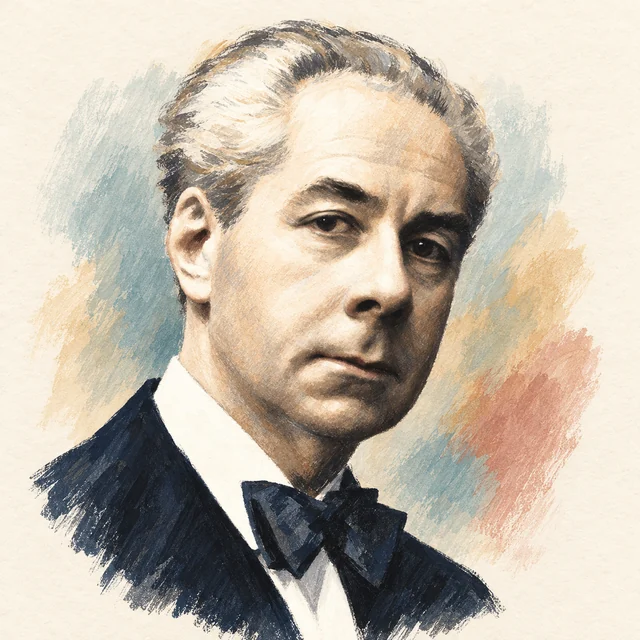
A life in context
The person behind the prize
Martin du Gard trained as an archivist-paleographer at the École des Chartes. He later linked his close documentation and distrust of improvisation to that scholarly discipline. Jean Barois, published in 1913, brought his first major success, exploring religious belief and free thought. His First World War service preceded the sustained work on Les Thibault, whose first parts appeared in 1922. The cycle follows the brothers Antoine and Jacques, their family and the social world moving toward war. L’Été 1914 appeared in 1936, before the 1937 Literature Prize; the final Épilogue followed in 1940. The award therefore recognised a cycle still being completed, not a series wholly published by 1937. His friendship with André Gide and the Nouvelle Revue Française circle belonged to a broader literary life. Historical research informed his fiction without turning its invented characters into documentary witnesses.
The contribution
Martin du Gard received the whole Literature Prize for the artistic force and truth of human conflict and contemporary life in Les Thibault. Its realism includes competing moral perspectives, not simply a catalogue of historical facts.
The idea in plain language
How can a novel make both a person’s inner conflicts and a changing society visible? Martin du Gard followed the Thibault family across a long narrative, giving the brothers Antoine and Jacques contrasting ways of confronting responsibility, belief and political commitment. Antoine’s medical work and Jacques’s rebellion and anti-war hopes open different perspectives on the same world.
Read the full award story ↗

